

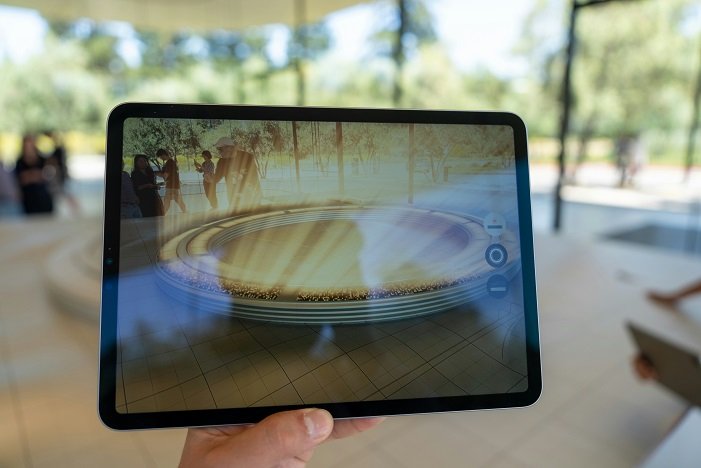
Virtual Reality (VR) and Augmented Reality (AR) represent two distinct yet interconnected technological advancements that have revolutionized how we interact with digital environments. Virtual Reality immerses users in entirely simulated environments, creating experiences that can diverge significantly from the physical world. In VR, users typically wear specialized headsets that track their movements and provide a 360-degree view of a computer-generated space. This immersion often aims to stimulate the senses, offering a convincing experience of presence within that virtual setting. Popular applications of VR can be seen in gaming, training simulations, and therapy, where users engage in various scenarios that would be impractical or impossible in reality.
On the other hand, Augmented Reality enhances the real world by layering digital information onto our physical environment. AR does not replace the real world but rather enriches it with additional context and visuals that users can interact with. This technology utilizes devices like smartphones and AR glasses, projecting graphics, sounds, and other sensory enhancements onto the user’s view of the real world. A prime example of AR can be found in gaming applications such as Pokémon GO, where digital creatures appear within users’ actual surroundings, blending reality with the virtual component seamlessly. Moreover, AR has seen significant use in industries such as retail and education, enabling users to visualize products in their environment or interact interactively with educational content.
Both technologies—VR and AR—offer unique benefits and applications, reflecting their differing approaches to crafting experiences that engage users. Understanding these definitions is crucial for leveraging their full potential and addressing their challenges and opportunities in diverse fields.
Key Differences Between VR and AR
Virtual Reality (VR) and Augmented Reality (AR) represent two distinct technologies that offer varying levels of immersion and user experiences. The fundamental difference lies in how they interact with the real world. VR completely immerses the user in a digital environment, requiring specialized devices such as headsets equipped with sensors. These headsets create a virtual space that blocks out the physical surroundings, allowing users to dive into experiences ranging from gaming to simulated training scenarios.
In contrast, Augmented Reality enhances the real world by overlaying digital information onto it. This technology can be accessed through widely available devices such as smartphones and tablets, which use the device’s camera to project virtual elements in the user’s environment. As a result, AR maintains the connection to the real world, allowing users to interact with both virtual objects and their physical surroundings simultaneously.
The types of devices used are a significant distinction between the two technologies. VR requires dedicated hardware, such as headsets like Oculus Rift or HTC Vive. These devices are designed to provide a fully immersive experience, enabling users to engage with intricate virtual environments. On the contrary, AR applications can run on most modern smartphones and tablets, making the technology widely accessible and easier to implement in everyday scenarios.
The user experience also varies significantly between VR and AR. VR often provides a solitary experience, focusing intensely on personal interaction with the digital world, which is beneficial in fields such as gaming, education, and training simulations. AR, being more interactive with the user’s real-life context, finds applications in areas like healthcare, where it can assist surgeons in visualizing complex information during procedures, or in retail, where customers can visualize products in their home environment before purchase.
Applications of Virtual Reality and Augmented Reality
Virtual Reality (VR) and Augmented Reality (AR) are technologies increasingly utilized across various industries, enhancing user experiences and operational efficiency. In gaming, for instance, VR creates immersive environments that engage players in ways traditional gaming cannot. Games such as Half-Life: Alyx exemplify how VR can transport players into detailed, interactive worlds, fostering emotional connections and offering unparalleled levels of engagement. VR is also applying its capabilities in serious gaming, where simulations are used for training purposes in fields like military and aviation, promoting skill development and preparedness in high-risk environments.
Real estate has also embraced VR, with many firms offering virtual walkthroughs of properties. These immersive tours allow potential buyers and renters to explore homes remotely, saving time and resources while enhancing the decision-making process. Companies such as Matterport have pioneered this technology, providing detailed VR models that enable clients to visualize spaces better than traditional photographs or videos.
On the other hand, AR is making significant strides in various sectors, notably retail. By using AR applications, consumers can visualize products in their homes before making purchases, fostering a personalized shopping experience. For example, brands like IKEA have developed AR apps that permit users to see how furniture fits in their living spaces. Additionally, AR is transforming maintenance and repair processes in industries such as aviation and automotive. Technicians can use AR glasses to access maintenance checklists and schematics, overlaying digital information onto physical components.
Further applications include navigation aids, where AR enhances directional guidance through real-time overlays of maps onto actual roads. Thus, both VR and AR are evolving technologies that significantly enhance user experiences, each in their unique way, across a plethora of industries.
Future Trends in VR and AR Technologies
The future of virtual reality (VR) and augmented reality (AR) technologies is poised for significant transformation, influenced by various emerging trends and innovations. One of the most promising directions is the integration of artificial intelligence (AI) with both VR and AR. This synergy will enhance user experiences, allowing for more personalized content and smarter interactions. For example, AI can analyze user behavior to adapt environments in real time, thus creating more immersive simulations or augmented experiences tailored to individual needs.
Another notable trend is the development of new and more advanced hardware. The headset market is continuously evolving, with companies introducing lighter, wireless options that offer greater field-of-view and improved resolutions. Devices equipped with haptic feedback and motion tracking technologies are also becoming more commonplace, enhancing the realism of virtual environments. This trend extends to mobile devices as well, where AR applications are increasing in capability, allowing for seamless integration of digital information into the physical world.
Furthermore, evolving user expectations are driving the advancement of both VR and AR technologies. As these technologies become more accessible, users anticipate more sophisticated applications in gaming, education, healthcare, and commerce. Industries are beginning to leverage these innovations for training simulations, remote assistance, and interactive marketing strategies. Nevertheless, the growth of VR and AR may also encounter challenges, including privacy concerns, the digital divide, and the need for comprehensive regulations to ensure user safety and data protection.
In light of these trends, the forthcoming years promise a renaissance in virtual and augmented reality, bringing forth not only advancements in technology but also a broader impact on how society interacts with digital content. Embracing these innovations will require adaptation and open-mindedness as they reshape various aspects of everyday life.