

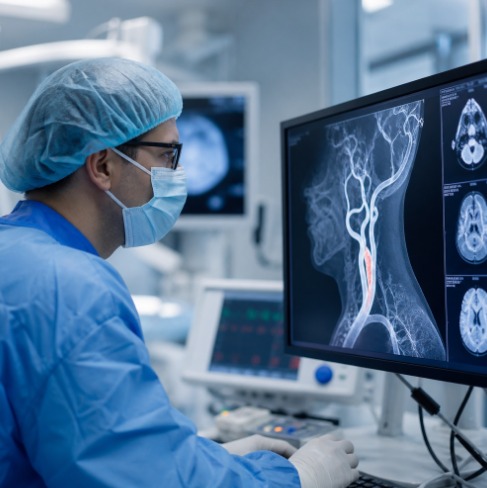
Cardiovascular disease remains one of the leading causes of death and disability worldwide, and among its many manifestations, narrowing of the arteries supplying blood to the brain poses one of the most serious threats. Carotid artery stenosis — a condition characterized by the progressive buildup of plaque within the carotid arteries — is a major contributor to ischemic stroke, a medical emergency that can result in permanent neurological damage or death. Understanding this condition, its warning signs, and the range of available treatments is essential for anyone seeking to protect their long-term brain and cardiovascular health.
What Is Carotid Artery Stenosis and Why Does It Matter?
The carotid arteries are two large blood vessels located on either side of the neck that carry oxygen-rich blood from the heart to the brain. When fatty deposits — known as atherosclerotic plaques — accumulate along the inner walls of these arteries, the passageway for blood flow becomes progressively narrower. This narrowing, referred to as stenosis, reduces the volume of blood reaching the brain and can also cause fragments of plaque to break off and travel upstream, blocking smaller cerebral vessels and triggering a stroke or transient ischemic attack (TIA).
What makes this condition particularly dangerous is that it often develops silently over many years. Many patients experience no symptoms until the stenosis becomes severe or a stroke occurs. This is why routine screening and awareness of risk factors are so critically important in preventive cardiovascular care.
Key Risk Factors to Be Aware Of
Several well-established risk factors accelerate the development of carotid artery disease. High blood pressure is among the most significant, as sustained hypertension damages arterial walls and promotes plaque formation. Smoking introduces toxins that inflame and stiffen blood vessels, while elevated LDL cholesterol directly contributes to atherosclerotic buildup. Diabetes impairs vascular function at multiple levels, and a sedentary lifestyle compounds all of these risks. Age is also a factor — the likelihood of significant stenosis increases considerably after the age of 65, though younger individuals with multiple risk factors are by no means immune.
Recognizing the Warning Signs
Because carotid artery stenosis can be asymptomatic for extended periods, recognizing the early warning signs of a transient ischemic attack is crucial. A TIA is sometimes called a “mini-stroke” and involves temporary neurological symptoms that typically resolve within minutes to hours. These may include sudden weakness or numbness on one side of the face or body, difficulty speaking or understanding speech, sudden vision loss in one eye, or unexplained dizziness and loss of balance. A TIA should never be dismissed as a minor event — it is a medical emergency and a strong predictor of a full stroke in the days or weeks that follow.
Diagnostic Tools Used to Assess Stenosis Severity
Accurate diagnosis is the foundation of effective management. Physicians typically begin with a carotid ultrasound, a non-invasive imaging technique that uses sound waves to visualize blood flow and detect plaque deposits. For more detailed assessment, computed tomography angiography (CTA) or magnetic resonance angiography (MRA) may be employed to produce high-resolution images of the arterial anatomy. In some cases, conventional catheter-based angiography is used when surgical planning requires the most precise mapping of the vessels. The degree of stenosis — expressed as a percentage of arterial narrowing — guides treatment decisions significantly.
Treatment Options: From Lifestyle Changes to Surgical Intervention
Treatment for carotid artery stenosis is tailored to the severity of the narrowing, the presence of symptoms, and the patient’s overall health profile. For mild to moderate stenosis without symptoms, aggressive medical management is typically the first line of defense. This includes antiplatelet medications such as aspirin or clopidogrel to reduce clot formation, statins to lower cholesterol and stabilize plaques, antihypertensive drugs to control blood pressure, and lifestyle modifications including smoking cessation, dietary changes, and regular physical activity.
When stenosis is severe — generally defined as greater than 70% narrowing — or when a patient has experienced a TIA or stroke, more invasive intervention is often warranted. Carotid endarterectomy (CEA) is a well-established surgical procedure in which a vascular surgeon removes the plaque directly from the artery. It has a long track record of effectiveness in reducing stroke risk in appropriately selected patients. An alternative is carotid artery stenting (CAS), a minimally invasive procedure in which a small mesh tube is inserted into the artery to hold it open and restore adequate blood flow. The choice between these procedures depends on individual anatomy, comorbidities, and the expertise of the treating team.
How Technology Is Reshaping Vascular Care
Advances in medical technology are continuously improving outcomes for patients with vascular disease. From high-resolution imaging systems that allow surgeons to plan procedures with extraordinary precision to robotic-assisted techniques and next-generation stent designs, the field is evolving rapidly. Innovations in healthcare technology are enabling earlier detection, less invasive treatments, and faster recovery times — all of which translate into better quality of life for patients managing complex cardiovascular conditions.
The Role of Pediatric and Cardiac Research in Broader Vascular Understanding
While carotid artery stenosis is predominantly an adult condition, research into vascular and cardiac health across all age groups continues to yield insights that benefit patients broadly. For instance, emerging research on thymic reimplantation in children recovering from heart surgery highlights how the immune system’s role in cardiovascular recovery is being reconsidered at a fundamental level. Such discoveries may eventually inform how inflammation — a key driver of atherosclerosis — is managed in adult vascular disease as well.
Expert Care at Cleveland Clinic Abu Dhabi
For patients in the UAE and the broader region seeking world-class evaluation and treatment, Cleveland Clinic Abu Dhabi offers a comprehensive vascular program staffed by internationally trained specialists. Patients diagnosed with carotid artery stenosis benefit from a multidisciplinary approach that integrates neurology, vascular surgery, interventional radiology, and cardiac care under one roof. The team employs the latest diagnostic technologies and evidence-based treatment protocols to deliver individualized care plans that prioritize both stroke prevention and long-term vascular health.
Cleveland Clinic Abu Dhabi’s vascular specialists work closely with each patient to assess their unique risk profile, explain all available options in detail, and guide them through every stage of treatment and recovery. Whether the recommended approach is medical management, surgical intervention, or a combination of both, patients can expect the same standard of care that has made Cleveland Clinic one of the most respected names in medicine globally.
Conclusion: Early Action Saves Lives
Carotid artery stenosis is a serious but manageable condition when identified and treated appropriately. The key lies in awareness — understanding the risk factors, recognizing the warning signs, and seeking timely medical evaluation rather than waiting for a catastrophic event to occur. With the combination of advanced diagnostics, proven surgical techniques, and ongoing innovations in vascular medicine, patients today have more options than ever before. Taking a proactive approach to cardiovascular health, supported by expert medical guidance, is the most powerful step anyone can take toward preventing stroke and preserving quality of life for years to come.