

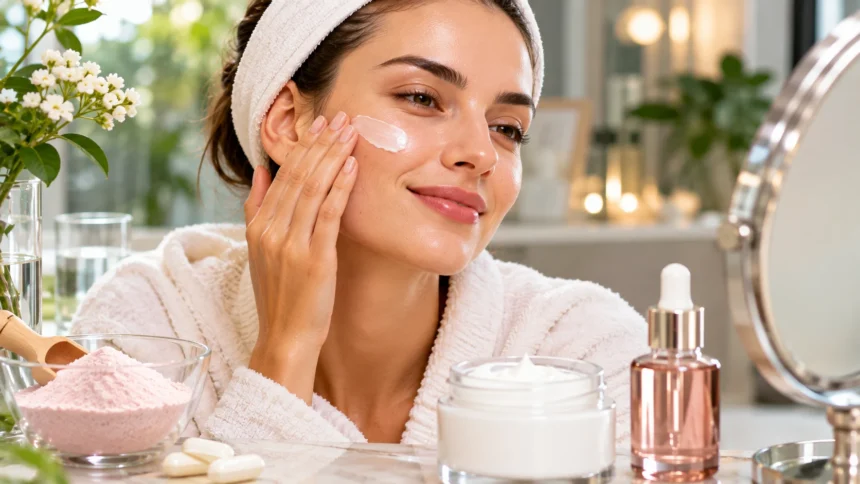
Collagen has become one of the most talked-about ingredients in the beauty industry. From anti-aging creams to hydrating serums, many skincare products promise smoother, firmer, and younger-looking skin. However, understanding what collagen skincare actually does can help you separate realistic benefits from exaggerated marketing claims.
Collagen is a naturally occurring protein that helps maintain the structure, strength, and elasticity of your skin. As people age, collagen production gradually decreases, contributing to changes in skin firmness and texture. This natural process has encouraged skincare brands to develop products designed to support healthier-looking skin.
But does applying collagen directly to your face actually increase collagen levels? The answer is more complicated than many advertisements suggest. Understanding how collagen products work, their limitations, and the ingredients that support collagen production can help you build a more effective skincare routine.
What Is Collagen in Skincare?
Collagen is a structural protein naturally found in the skin, bones, tendons, and other connective tissues. In skincare, it is commonly included in moisturizers, creams, masks, and serums designed to improve skin hydration and appearance. Its primary cosmetic role is to help the skin feel smoother and retain moisture.
The skin contains several types of collagen, with type I and type III being particularly important for its structure. These proteins contribute to firmness, strength, and the supportive framework beneath the skin’s surface. However, collagen applied through skincare products behaves differently from collagen naturally produced within the body.
Most topical collagen products work mainly on the outermost layers of the skin. Collagen molecules are generally too large to penetrate deeply enough to replace lost structural collagen. Instead, these formulations often help improve surface hydration, temporarily soften the appearance of fine lines, and support a smoother skin texture.
How Does Collagen Work in the Skin?
Collagen forms part of the skin’s extracellular matrix, which provides structural support and helps maintain firmness. It works alongside elastin and other components that contribute to skin flexibility and resilience. Healthy collagen networks help the skin maintain its shape while supporting normal tissue repair and renewal.
Specialized cells called fibroblasts are responsible for producing much of the collagen found in the dermis. These cells respond to biological signals and environmental conditions that influence collagen formation and breakdown. Over time, natural aging and external factors can reduce the skin’s ability to maintain its existing collagen structure.
Understanding this process explains why topical collagen cannot simply replace collagen lost from deeper skin layers. Applying a collagen cream does not automatically deliver intact collagen to the dermis. However, certain skincare ingredients can help protect existing collagen or encourage the skin’s natural collagen-related processes.
What Does Collagen Skincare Actually Do?
The most noticeable benefit of collagen skincare is improved surface hydration. Many collagen-containing products help create a moisture-retaining film on the skin, making it feel softer and smoother. This effect can temporarily reduce the visibility of fine lines caused or emphasized by dryness.
Collagen creams may also improve the skin’s overall appearance by supporting a more comfortable, hydrated surface. When the outer skin layer retains moisture effectively, the complexion can appear smoother and more refreshed. These cosmetic improvements are valuable, although they should not be confused with rebuilding collagen deep within the skin.
The effectiveness of collagen skincare also depends on the complete formulation rather than collagen alone. Ingredients such as glycerin, hyaluronic acid, and ceramides may contribute significantly to moisturizing benefits. Evaluating the entire product helps explain why some collagen creams feel more effective than others.
Benefits of Collagen Skincare for Your Face
Collagen skincare products are often marketed for improving hydration, softness, and visible signs of aging. Their most dependable benefits generally involve maintaining moisture and temporarily improving the appearance of dry skin. A well-formulated collagen moisturizer can leave the face feeling comfortable and looking smoother.
Another potential benefit is improved skin texture through regular moisturizing. Dry patches and rough areas can become less noticeable when the skin receives adequate hydration. Although collagen itself does not necessarily cause these improvements, collagen-containing formulations may include complementary ingredients that support the skin barrier.
Some people also notice that their skin appears temporarily plumper after applying collagen products. This effect usually occurs because hydration makes fine surface lines less prominent. Results differ according to skin type, formulation, environmental conditions, and how consistently the product is used.
Can Collagen Skincare Reduce Wrinkles?
Collagen skincare can temporarily improve the appearance of certain fine lines, particularly those associated with dryness. Hydrated skin often looks smoother because moisture changes the appearance of its surface. However, topical collagen has not been convincingly shown to significantly reverse deeper wrinkles by replacing the skin’s structural collagen.
Deep wrinkles develop through several processes, including collagen changes, repeated facial movements, and prolonged environmental exposure. A moisturizer containing collagen cannot address all these factors. Products that improve hydration may make wrinkles less noticeable, but their effects are generally cosmetic rather than structural.
For people interested in reducing visible signs of aging, other ingredients have stronger supporting evidence. Retinoids can stimulate collagen-related processes, while consistent sunscreen use helps protect against ultraviolet damage. Combining evidence-based skincare with effective moisturizing is generally more useful than relying on collagen creams alone.
Does Topical Collagen Increase Collagen Production?
One of the biggest misconceptions about collagen skincare is that applying collagen directly increases the skin’s natural collagen supply. Most intact collagen molecules are too large to pass through the skin barrier and reach the deeper layers where structural collagen is found. Consequently, topical collagen primarily functions as a conditioning and moisturizing ingredient.
Some products contain hydrolyzed collagen, which consists of smaller collagen fragments or peptides. These ingredients may behave differently from intact collagen, and certain laboratory studies have explored their potential biological effects. However, convincing clinical evidence that ordinary topical collagen products meaningfully increase dermal collagen remains limited.
If increasing collagen production is your main skincare goal, ingredients with stronger research support may be more appropriate. Retinoids, certain vitamin C formulations, and other approaches can influence collagen-related pathways. Their effectiveness depends on the formulation, concentration, individual skin response, and consistent use.
Collagen Creams vs. Collagen Serums
Collagen creams are usually designed to provide hydration and support the skin’s moisture barrier. They often contain emollients and occlusive ingredients that help reduce moisture loss. Their richer texture can make them particularly comfortable for people with dry skin or those experiencing seasonal dryness.
Collagen serums generally have lighter textures and may contain additional hydrating ingredients such as hyaluronic acid or glycerin. These formulations can be convenient for people who prefer lightweight skincare or want to layer products beneath moisturizer. However, a serum’s thinner texture does not automatically make its collagen more effective.
Choosing between collagen cream and serum depends mainly on your skin type and the complete formulation. Dry skin may benefit from a richer moisturizer, while oilier skin may prefer a lightweight product. Neither format guarantees increased collagen production simply because collagen appears on the ingredient label.
Marine Collagen vs. Plant-Based Collagen in Skincare
Marine collagen is typically derived from fish sources and frequently appears in beauty products marketed for skin hydration. It may be processed into smaller collagen fragments for cosmetic formulations. Like other topical collagen ingredients, its benefits depend on the product’s composition rather than its marine origin alone.
Plant-based skincare products sometimes use the term vegan collagen, although plants do not naturally produce animal collagen. These formulas may contain plant-derived proteins, amino acids, or ingredients intended to support skin conditioning. Some newer technologies also produce collagen-like proteins through biotechnology, making ingredient labeling especially important.
Neither marine nor plant-based collagen skincare should automatically be considered superior. Their performance depends on stability, formulation, moisturizing ingredients, and individual skin compatibility. Consumers should examine the full ingredient list, particularly when avoiding animal-derived materials or managing known allergies.
Collagen Skincare for Dry Skin
Dry skin often feels rough, tight, or uncomfortable because of insufficient moisture and changes in barrier function. Collagen-containing moisturizers may help improve surface hydration when formulated with suitable humectants and emollients. Regular moisturizing can make dry skin feel smoother and reduce the appearance of temporary dehydration lines.
Products containing glycerin, ceramides, and hyaluronic acid may provide additional support for dry skin. These ingredients help attract moisture, improve comfort, or reinforce the skin’s protective barrier. A collagen cream that combines several moisturizing components may therefore be more useful than one relying primarily on collagen.
People with dry skin should also consider their cleansing habits and environmental conditions. Harsh cleansers, frequent hot showers, and dry indoor air can contribute to moisture loss. Gentle cleansing and consistent moisturizing are important parts of maintaining comfortable, healthy-looking skin.
Collagen Skincare for Oily and Combination Skin
People with oily skin can use collagen skincare, but lightweight formulations are often more comfortable. Heavy creams may feel greasy, particularly in warm or humid conditions. Water-based serums and non-comedogenic moisturizers may provide adequate hydration without creating an unnecessarily rich finish.
Combination skin requires balancing hydration across areas with different needs. The cheeks may feel dry while the forehead and nose produce more oil. A lightweight collagen-containing moisturizer can be applied across the face, with additional moisturizer used on drier areas when necessary.
It is important to remember that collagen itself does not directly control sebum production. Products marketed as collagen skincare for oily skin may contain other ingredients that influence texture or shine. Choosing a product based on its complete formulation is more practical than selecting it because of collagen claims.
Collagen Skincare vs. Hyaluronic Acid
Collagen and hyaluronic acid are frequently mentioned together in moisturizing skincare products. However, they perform different functions in the body and in cosmetic formulations. Collagen is naturally a structural protein, while hyaluronic acid is a substance known for its ability to bind water.
When applied topically, hyaluronic acid generally works as a humectant that helps hydrate the skin’s surface. Topical collagen can also contribute to skin conditioning and moisture retention, depending on its form. Neither ingredient should be expected to replace lost structural collagen within the dermis simply through regular application.
For people mainly concerned about dehydration, a well-formulated hyaluronic acid product may be particularly helpful. Collagen-containing moisturizers can also improve softness and surface comfort. The better choice depends on how the complete product performs on your skin rather than which ingredient receives more attention in advertising.
Collagen Skincare vs. Retinol
Collagen skincare and retinol address different cosmetic concerns through different mechanisms. Collagen-containing products primarily help with surface hydration and skin conditioning. Retinol, a vitamin A derivative, can influence skin renewal and collagen-related processes when used in appropriately formulated products.
Retinol has stronger clinical evidence for improving certain signs of photoaging, including fine lines and uneven skin texture. However, it can also cause irritation, dryness, and sensitivity, especially when introduced too quickly. Topical collagen is generally used as a moisturizing ingredient and does not provide the same established anti-aging effects.
Some people may use a gentle collagen-containing moisturizer alongside a retinol product to support skin comfort. Introducing retinol gradually and following product instructions can help reduce irritation. Retinoids should be avoided during pregnancy, and anyone with sensitive or medically affected skin should seek professional guidance before using stronger treatments.
Vitamin C and Collagen Production
Vitamin C plays an essential biological role in collagen synthesis and helps protect skin components from oxidative stress. It supports processes involved in forming stable collagen structures. This makes vitamin C an important nutrient for normal skin function and a useful ingredient in certain skincare formulations.
Topical vitamin C products are often used to improve the appearance of uneven skin tone and signs of environmental damage. Certain formulations have also shown benefits related to collagen production and photoaging. However, results depend on the form of vitamin C, product stability, concentration, and how effectively it reaches the skin.
Vitamin C and collagen-containing moisturizers can serve complementary purposes within a skincare routine. A vitamin C serum may target specific skin concerns, while a moisturizer helps maintain hydration. Daily sunscreen remains important because skincare ingredients cannot fully prevent ultraviolet damage on their own.
How to Use Collagen Skincare in Your Daily Routine
Using collagen skincare is generally straightforward because most products function as moisturizers or conditioning treatments. Begin by cleansing your face with a gentle product suitable for your skin type. Apply a collagen serum according to its instructions, usually before a thicker moisturizer.
If you are using a collagen cream, apply it after cleansing and any lightweight treatment products. The exact order may vary depending on the manufacturer’s directions and product texture. During the morning, finish with broad-spectrum sunscreen offering SPF 30 or higher to help protect against ultraviolet damage.
Consistency is useful for maintaining the moisturizing benefits of collagen skincare. However, using excessive amounts does not guarantee better results or increased collagen production. A simple routine that supports hydration, sun protection, and skin comfort is often more practical than applying numerous overlapping products.
Are There Any Side Effects of Collagen Skincare?
Topical collagen is generally well tolerated in cosmetic products, but individual reactions remain possible. Some people may experience redness, itching, or irritation from fragrances, preservatives, or other ingredients in the formulation. These reactions are not necessarily caused by collagen itself.
People with known fish allergies should exercise caution when considering marine-derived collagen products. Although processing methods differ, checking ingredient sources and seeking professional guidance when uncertain is sensible. Individuals with very sensitive skin may also benefit from choosing fragrance-free products.
Before introducing a new collagen product, test it on a small area of skin according to appropriate patch-testing guidance. Stop using the product if irritation develops, and seek medical advice for persistent or significant reactions. Reviewing ingredient labels helps reduce the chance of choosing unsuitable formulations.
How to Choose the Best Collagen Skincare Products
The first step in selecting collagen skincare is identifying your primary skin concern. If dryness is the main issue, choose a product containing effective moisturizing ingredients alongside collagen. For concerns involving fine lines or uneven texture, consider whether the formulation includes ingredients with stronger evidence for those specific results.
Product quality matters more than exaggerated anti-aging promises. Look for clear ingredient information, suitable packaging, and realistic descriptions of expected benefits. Claims suggesting that ordinary collagen creams can completely restore youthful skin structure should be approached with caution.
Skin compatibility is equally important when choosing a product. People with sensitive skin may prefer fragrance-free formulas, while those with oily skin may benefit from lightweight textures. Selecting a formulation that fits your routine and feels comfortable encourages consistent use and better overall skincare habits.
Lifestyle Habits That Help Protect Natural Collagen
Protecting your skin from excessive ultraviolet exposure is one of the most important ways to reduce premature collagen damage. Sunlight can contribute to the breakdown of structural proteins and accelerate visible skin aging. Using broad-spectrum sunscreen, seeking shade, and wearing protective clothing can help limit unnecessary exposure.
A balanced diet also supports the body’s normal collagen production and tissue maintenance. Protein-rich foods provide amino acids, while vitamin C and other essential nutrients contribute to healthy biological processes. No single food can guarantee increased facial collagen, but adequate nutrition supports overall skin health.
Other helpful habits include avoiding smoking, getting sufficient sleep, and maintaining a gentle skincare routine. Smoking can negatively affect skin structure and accelerate visible signs of aging. Consistent protective habits are generally more valuable for long-term skin health than relying exclusively on expensive cosmetic treatments.
Conclusion
Collagen skincare can provide useful moisturizing and skin-conditioning benefits, particularly for people experiencing dryness or rough texture. Collagen-containing creams and serums may temporarily improve skin smoothness and soften the appearance of dehydration-related fine lines. However, these cosmetic effects should not be confused with rebuilding structural collagen beneath the skin.
Understanding what collagen skincare actually does helps consumers make more informed purchasing decisions. Topical collagen generally works at the skin’s surface, while ingredients such as retinoids and certain vitamin C formulations have stronger evidence for influencing collagen-related processes. The complete product formulation determines its practical benefits.
An effective skincare routine does not need to depend on expensive collagen products or dramatic anti-aging promises. Gentle cleansing, suitable moisturizing, sun protection, and evidence-based treatments can support healthy-looking skin over time. Choosing products according to your skin’s needs is more useful than following every new beauty trend.
Frequently Asked Questions (FAQs)
Does collagen skincare actually work?
Collagen skincare can help moisturize the skin, improve surface softness, and temporarily reduce the appearance of dehydration-related fine lines. However, ordinary topical collagen products have limited evidence for rebuilding deeper structural collagen.
Can collagen creams make your skin look younger?
Collagen creams may temporarily make skin appear smoother and plumper by improving hydration. They cannot reliably reverse deep wrinkles or restore collagen lost through aging simply by applying collagen to the face.
Is collagen or retinol better for wrinkles?
Retinol has stronger scientific evidence for improving certain wrinkles and signs of photoaging. Collagen skincare mainly provides moisturizing benefits, so the better option depends on your skin concerns and tolerance.
Can I use collagen skincare every day?
Yes, most collagen moisturizers and serums can be used daily when suitable for your skin. Follow the product instructions and discontinue use if irritation develops.
How long does collagen skincare take to show results?
Moisturizing effects may become noticeable soon after application, while improvements in overall skin comfort can develop with consistent use. Topical collagen should not be expected to produce substantial structural collagen restoration over time.