
Healthy, beautiful hair starts with a good hair care routine, and two of the most important products are shampoo and conditioner. Although most people use both regularly, many do not fully understand how they work or why they serve different purposes. Choosing the right products can improve scalp cleanliness, hair softness, shine, and overall manageability.
Understanding shampoo vs conditioner is essential for keeping your hair clean without making it excessively dry or difficult to style. Shampoo primarily removes dirt, oil, and product buildup, while conditioner helps soften and protect the hair strands. This guide explains the key differences between shampoo and conditioner, their ingredients, benefits, application methods, and how to choose suitable products for your hair type.
Shampoo vs Conditioner: What Is the Main Difference?
The main difference between shampoo and conditioner is their primary function in your hair care routine. Shampoo cleanses the scalp and hair by removing excess oil, sweat, dirt, and styling residue. Conditioner improves the feel of hair strands by reducing friction, increasing softness, and making them easier to detangle after washing or during everyday styling.
Shampoo contains cleansing agents that help lift unwanted substances from the scalp so they can be rinsed away with water. Conditioner contains ingredients that attach to or coat hair fibers, improving smoothness and reducing tangling. Although both products contribute to maintaining healthy-looking hair, they achieve their results through different formulations and mechanisms.
Another important distinction is where these products are usually applied. Shampoo is primarily massaged into the scalp, while traditional rinse-out conditioner is generally concentrated on the mid-lengths and ends. Using both appropriately helps balance effective cleansing with adequate conditioning, creating a routine that supports scalp comfort and improves the appearance of your hair.
What Is Shampoo and How Does It Work?
Shampoo is a cleansing product designed to remove excess sebum, environmental dirt, sweat, and accumulated styling products from the scalp and hair. Sebum is the natural oil produced by glands in the skin, helping lubricate the scalp and strands. However, excessive buildup can leave hair looking greasy, flat, or difficult to manage.
Most shampoos contain surfactants, which are cleansing ingredients that help oil and water interact during washing. These substances surround oily particles and allow them to be removed when you rinse your hair. Different formulations use different surfactants, influencing how strongly a shampoo cleanses and how comfortable it feels on individual hair types.
Some shampoos are also formulated to address specific concerns such as dandruff, excessive oiliness, or sensitivity. Medicated shampoos may contain active ingredients intended to manage particular scalp conditions, while moisturizing shampoos often include additional conditioning agents. Choosing an appropriate shampoo helps maintain cleanliness without unnecessarily stripping the hair or irritating the scalp.
What Is Conditioner and How Does It Work?
Hair conditioner is a product designed to improve softness, reduce friction, and make hair strands easier to manage. Shampoo removes accumulated residue, but cleansing can sometimes leave the hair’s surface feeling rough or tangled. Conditioner helps smooth the outer surface of the hair, making brushing, detangling, and everyday styling more comfortable.
Many conditioners contain positively charged conditioning ingredients that are attracted to negatively charged areas of the hair surface. These compounds can reduce static electricity and improve the way individual strands move against each other. Other ingredients provide lubrication and help the hair feel smoother, particularly when it is dry, damaged, or chemically treated.
Regular conditioning can also help reduce mechanical breakage associated with aggressive brushing and repeated friction. However, conditioner cannot permanently restore every form of structural damage or repair split ends completely. Its main benefits involve improving the appearance, manageability, and feel of existing hair while supporting gentler styling and maintenance practices.
Shampoo vs Conditioner Ingredients: What Makes Them Different?
Shampoo and conditioner contain different combinations of ingredients because they perform different jobs. Common shampoo cleansers include sodium laureth sulfate, sodium lauryl sulfate, and various sulfate-free surfactants. These ingredients help remove oil and residue, although the overall formula determines how gentle or effective a shampoo feels during regular washing.
Conditioners commonly contain ingredients such as cetearyl alcohol, cetyl alcohol, behentrimonium chloride, and conditioning silicones. Fatty alcohols help improve softness and product texture, while certain conditioning agents reduce friction and support detangling. Silicones such as dimethicone may temporarily smooth the hair surface and enhance shine, depending on the product formulation.
Both shampoos and conditioners may contain glycerin, panthenol, plant oils, fragrances, and other ingredients intended to improve their performance. However, no single ingredient determines whether a product is suitable for everyone. Understanding the overall formulation, your hair’s condition, and potential sensitivities is more useful than automatically avoiding products based on individual ingredients.
How to Use Shampoo and Conditioner Correctly
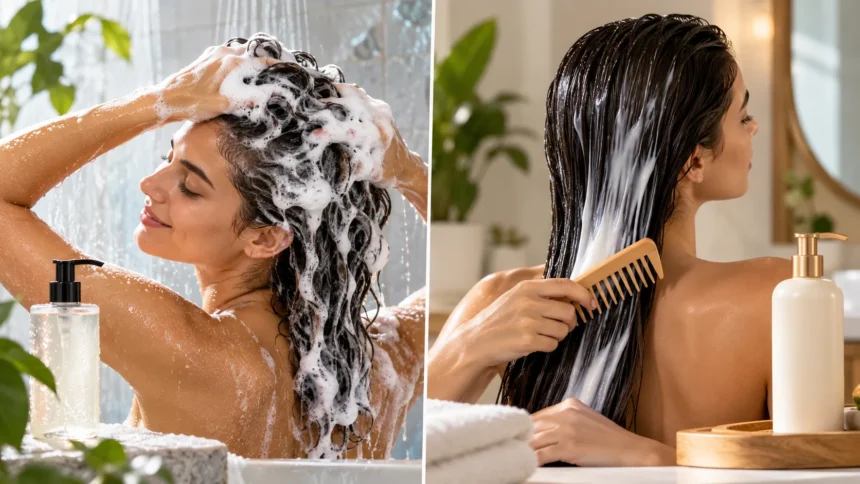
The correct hair washing routine generally begins with shampooing before applying conditioner. Thoroughly wet your hair with comfortably warm water, then apply an appropriate amount of shampoo to your scalp. Gently massage with your fingertips to loosen oil and residue, avoiding aggressive scratching or unnecessary friction that could irritate the skin.
After shampooing, rinse thoroughly to remove the cleanser and loosened buildup. Apply conditioner mainly to the mid-lengths and ends, where hair is often older and more vulnerable to dryness. Distribute the product evenly using your fingers or a suitable comb, then leave it on for the time recommended on the packaging.
Rinse the conditioner according to its instructions, then gently squeeze excess water from your hair before drying. Avoid rubbing wet strands aggressively with a towel because this can increase tangling and breakage. A microfiber towel or soft cotton fabric can help absorb moisture while reducing unnecessary friction during the drying process.
Shampoo vs Conditioner for Oily, Fine, and Straight Hair
People with oily scalps often require shampoos that effectively remove excess sebum without causing unnecessary discomfort. Lightweight cleansing formulas can help maintain fresh-looking roots, particularly when oil accumulation becomes visible shortly after washing. Fine, straight hair may show greasiness more quickly because natural oils can spread relatively easily along individual strands.
For fine hair, choosing a lightweight conditioner is equally important because heavy products can make strands appear flat. Volumizing or lightweight conditioning formulas may provide sufficient softness without leaving a thick coating. Applying smaller amounts toward the ends can help maintain movement while avoiding excessive heaviness around the roots.
People with naturally oily scalps may benefit from daily or alternate-day shampooing, depending on their individual needs. There is no reliable rule that washing less frequently will automatically reduce sebum production. Instead, choose a gentle shampoo that keeps your scalp comfortable and adjust conditioner application according to your hair’s texture and manageability.
Shampoo vs Conditioner for Dry, Curly, and Coily Hair
Dry, curly, and coily hair often requires more attention to conditioning because natural oils may not travel easily along textured strands. Frequent washing with unsuitable cleansers can leave these hair types feeling rough, tangled, or difficult to manage. A gentle shampoo combined with an appropriate moisturizing conditioner can help maintain softness and reduce unnecessary friction.
Curly hair conditioners may contain richer conditioning agents, fatty alcohols, and selected oils that improve lubrication and detangling. Loose waves may respond better to lightweight formulas, while tighter curls and coils sometimes benefit from more substantial conditioning products. Individual preferences still vary considerably because strand thickness, hair density, and styling routines influence product performance.
Some people with textured hair prefer washing less frequently and using leave-in conditioners between cleansing sessions. This approach may help maintain manageability when the scalp remains comfortable and free from excessive buildup. Gentle detangling while the hair is adequately conditioned can further reduce breakage and help preserve the appearance of natural curl patterns.
Shampoo vs Conditioner for Damaged and Color-Treated Hair
Coloring, bleaching, chemical straightening, and repeated heat styling can affect the hair shaft and increase dryness or fragility. Choosing suitable shampoo and conditioner products becomes particularly important when managing chemically treated hair. Gentle cleansing helps remove unwanted residue, while appropriate conditioning can improve softness and reduce friction during brushing and styling.
Shampoos formulated for color-treated hair may contain cleansing systems designed to minimize unnecessary roughness during washing. Conditioners marketed for damaged hair often include lubricating ingredients, proteins, or specialized treatment compounds. These formulas can improve the appearance and manageability of processed strands, although their effects depend on the product and the extent of damage.
When your hair is fragile, avoid relying on shampoo and conditioner alone to prevent further damage. Reducing excessive heat exposure, following appropriate coloring intervals, and using gentle detangling techniques are equally important. Severely split or broken strands cannot always be restored by cosmetic products, making trimming and preventive care necessary in some situations.
How Often Should You Use Shampoo and Conditioner?
Shampoo frequency depends mainly on scalp oil production, hair texture, activity level, and styling product use. People with oily scalps or frequent sweat exposure may prefer washing every day or every other day. Those with naturally dry, curly, or tightly coiled hair may find longer intervals more comfortable when their scalps remain clean.
Conditioner can generally be used whenever you shampoo, especially if your hair becomes dry or tangled after cleansing. Some people also benefit from leave-in conditioning products between wash days to improve softness and styling. However, applying excessive amounts of rich conditioner can create heaviness or buildup, particularly on fine hair.
Pay attention to how your scalp and strands respond rather than following a rigid weekly schedule. Greasy roots, itching, or significant residue may indicate that more frequent cleansing is appropriate. Dryness, stiffness, or excessive tangling may suggest adjusting your shampoo, conditioning products, washing techniques, or the frequency of certain treatments.
Can You Use Shampoo Without Conditioner or Conditioner Without Shampoo?
Using shampoo without conditioner may be suitable for some people whose hair remains comfortable and manageable after cleansing. Very short hair or naturally oily, fine strands may not always require substantial conditioning. However, skipping conditioner can increase tangling or roughness for dry, curly, long, or chemically treated hair, making gentle handling more difficult.
Using traditional conditioner without shampoo is different because most rinse-out conditioners are not designed to remove significant amounts of oil and dirt. Some people use cleansing conditioners, commonly called co-washes, which are specifically formulated for gentle cleansing. These products may suit certain hair types but can be insufficient when substantial buildup requires stronger cleaning.
Two-in-one shampoo and conditioner products provide another convenient option by combining cleansing and conditioning ingredients within one formula. They may work well for simple routines or individuals with relatively uncomplicated hair needs. However, people with dry ends and oily roots sometimes benefit from separate products because they allow more control over cleansing and conditioning.
Common Shampoo and Conditioner Mistakes to Avoid
One common hair care mistake is applying shampoo aggressively across the entire hair length instead of focusing primarily on the scalp. Repeated friction can increase tangling and make fragile strands harder to manage. Likewise, applying excessive amounts of conditioner near oily roots may leave some hairstyles looking heavy or greasy after washing.
Another mistake is assuming that more expensive shampoos and conditioners always produce better results. A product’s effectiveness depends on its formulation and compatibility with your individual needs rather than its price. Frequently switching products without evaluating their performance can also make it difficult to identify what improves or worsens your hair’s condition.
Ignoring persistent scalp symptoms is another issue that ordinary cosmetic products may not resolve. Dandruff, significant itching, redness, and unusual hair shedding can require different approaches depending on their underlying causes. If symptoms continue despite reasonable changes to your routine, seek professional advice rather than repeatedly experimenting with stronger cleansers or conditioning treatments.
Conclusion
Understanding the difference between shampoo and conditioner makes building an effective hair care routine much easier. Shampoo primarily cleanses the scalp by removing oil, dirt, sweat, and product residue, while conditioner improves softness, lubrication, and manageability. Using both appropriately can help maintain cleaner roots, smoother strands, and a more comfortable washing experience.
The best combination depends on your scalp condition, hair texture, chemical treatments, and daily styling habits. Fine or oily hair may require lightweight formulas, while dry, curly, or damaged hair often benefits from richer conditioning. Choosing products based on actual needs is more effective than following popular trends or assuming one formula works for everyone.
Healthy-looking hair does not require an excessively complicated routine or a large collection of expensive products. Focus on appropriate cleansing, consistent conditioning, gentle detangling, and reducing unnecessary heat or chemical damage. By understanding how shampoo and conditioner work together, you can create a practical hair care routine that keeps your strands softer, cleaner, and easier to manage.
Frequently Asked Questions (FAQs)
1. What Is the Main Difference Between Shampoo and Conditioner?
Shampoo removes excess oil, dirt, sweat, and product buildup from the scalp and hair. Conditioner improves softness, reduces friction, and helps prevent tangling, making hair easier to manage after washing.
2. Should You Use Shampoo or Conditioner First?
Shampoo is generally used first to cleanse the scalp and remove accumulated residue. Conditioner follows to improve softness and detangling, although specialized routines may use a different order.
3. Can You Use Conditioner Every Day Without Shampoo?
Yes, some people use suitable conditioners between shampoo sessions to improve manageability. However, traditional conditioner does not replace regular scalp cleansing, and excessive product buildup may require shampoo.
4. Is Conditioner Necessary After Every Shampoo?
Conditioner is beneficial for many hair types, particularly dry, curly, long, or damaged hair. However, individual needs vary, and some people with short or fine hair may prefer lighter conditioning.
5. Can Shampoo and Conditioner Cause Hair Loss?
Ordinary shampooing and conditioning do not usually cause permanent hair loss. However, irritating products and aggressive handling may contribute to breakage, while persistent shedding should be evaluated by a healthcare professional.