
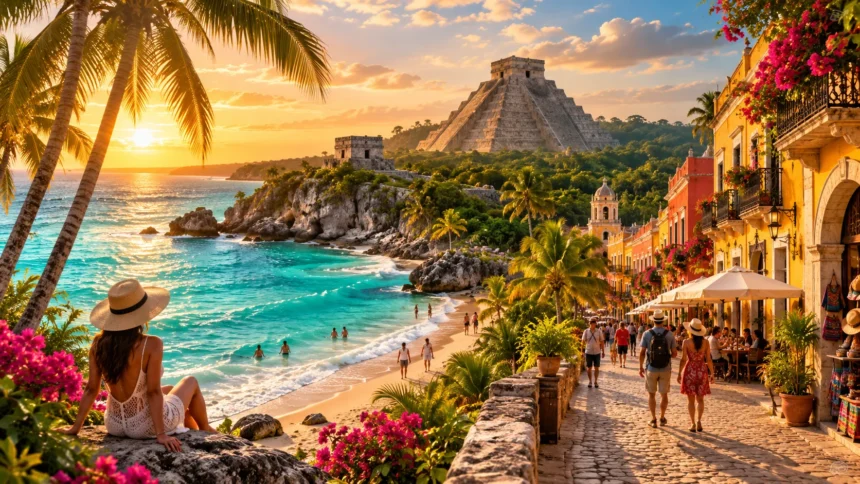
Mexico is one of the most exciting travel destinations in North America, known for its beautiful beaches, historic cities, ancient ruins, and colorful cultural traditions. The country offers an incredible variety of attractions, from tropical coastlines to magnificent archaeological sites. Whether you enjoy exploring historic landmarks, relaxing beside the ocean, or discovering traditional food, Mexico provides unforgettable experiences for different types of travelers.
The best places in Mexico include popular destinations such as Cancun, Mexico City, Tulum, Oaxaca, and Puerto Vallarta. Each location offers a distinctive combination of natural beauty, cultural heritage, and exciting attractions. Visitors can discover ancient Maya civilizations, explore colorful colonial neighborhoods, and admire spectacular coastal landscapes. Mexico’s diverse regions make it an excellent destination for family vacations, cultural adventures, and relaxing getaways.
This Mexico travel guide highlights the country’s most beautiful destinations and famous attractions. You will discover historic cities, tropical beaches, archaeological landmarks, and scenic natural wonders. From the turquoise waters of the Riviera Maya to the lively streets of Mexico City, these destinations provide plenty of inspiration for planning a memorable Mexican vacation.
Mexico City: Discover History, Culture, and Famous Landmarks
Mexico City is one of the best places in Mexico for travelers interested in history, culture, and urban attractions. The country’s capital combines impressive historical architecture with modern museums, beautiful parks, and lively neighborhoods. Visitors can explore cultural landmarks while experiencing authentic Mexican city life. Its diverse attractions make Mexico City an excellent starting point for a longer journey.
The historic center is home to important landmarks, including the Metropolitan Cathedral and the National Palace. Visitors can walk through the Zocalo, one of the city’s most famous public squares. The surrounding streets contain traditional restaurants, historical buildings, and cultural attractions. Exploring these neighborhoods provides valuable insights into Mexico’s colonial history and contemporary identity.
Mexico City also features impressive museums and beautiful green spaces worth discovering. Chapultepec Park is a popular attraction containing walking paths, cultural institutions, and recreational areas. The National Museum of Anthropology offers fascinating exhibitions about Mexico’s ancient civilizations. Spending four or five days here allows travelers to explore the city’s major attractions without rushing.
Cancun: Enjoy Beautiful Caribbean Beaches and Resorts
Cancun is one of Mexico’s most famous beach destinations, located along the Caribbean coastline of the Yucatan Peninsula. The city is known for its turquoise waters, white-sand beaches, and modern beachfront resorts. Visitors can enjoy tropical scenery while exploring nearby natural and cultural attractions. Cancun is particularly popular among travelers seeking comfortable seaside vacations and beautiful ocean views.
The Hotel Zone contains several well-known beaches, including Playa Delfines and Playa Marlin. Visitors can relax on the sand, admire coastal scenery, and enjoy swimming where conditions are suitable. Beachfront restaurants and resorts provide convenient dining and accommodation options. The surrounding area also offers shopping centers, family-friendly attractions, and organized sightseeing excursions.
Cancun is also a convenient base for exploring other destinations along the Riviera Maya. Travelers can arrange visits to nearby islands, cenotes, and historical archaeological sites. Its international airport provides connections to many global destinations. Visiting outside the busiest holiday periods may help travelers find more affordable accommodation and enjoy less crowded attractions.
Tulum: Explore Ancient Maya Ruins and Tropical Beaches
Tulum is one of the most beautiful places in Mexico, famous for its coastal scenery and remarkable Maya archaeological heritage. Located along the Caribbean coast, the destination combines ancient ruins with tropical beaches and natural attractions. Visitors can explore historic landmarks while enjoying views of the turquoise sea. Its combination of culture and coastal beauty makes Tulum particularly memorable.
The Tulum Archaeological Zone is one of the area’s most recognizable attractions. Its ancient stone buildings stand on cliffs overlooking the Caribbean Sea, creating spectacular coastal views. Visitors can explore designated pathways while learning about the historical importance of this former Maya settlement. The site’s dramatic location makes it especially attractive for photography and cultural sightseeing.
Tulum also offers beautiful beaches, freshwater cenotes, and nearby nature reserves. Travelers can discover Playa Paraiso, explore approved swimming areas, and enjoy local restaurants serving traditional Mexican food. Some coastal areas are expensive during peak tourism seasons, so advance planning is useful. Visiting early in the day can provide a more comfortable experience at popular attractions.
Chichen Itza: Discover Mexico’s Ancient Maya Civilization
Chichen Itza is one of Mexico’s most famous archaeological attractions and a UNESCO World Heritage Site. Located in the Yucatan Peninsula, this ancient Maya city is internationally recognized for its impressive architecture and historical importance. Visitors can explore remarkable stone structures that reflect advanced engineering and cultural knowledge. The site is an essential destination for travelers interested in ancient civilizations.
El Castillo, also known as the Temple of Kukulcan, is the most recognizable landmark at Chichen Itza. This magnificent stepped pyramid stands at the center of the archaeological complex. Visitors can also admire the Great Ball Court and other historical structures. Guided tours provide interesting explanations about Maya astronomy, architecture, religious traditions, and the site’s historical significance.
Chichen Itza can be visited from destinations such as Valladolid, Merida, and Cancun, although travel distances vary considerably. Arriving early is helpful because temperatures can become hot and visitor numbers increase throughout the day. Comfortable walking shoes, drinking water, and sun protection are recommended. Allowing several hours provides enough time to appreciate the archaeological complex.
Playa del Carmen: Relax Along the Riviera Maya
Playa del Carmen is a popular coastal destination along Mexico’s beautiful Riviera Maya. Known for its sandy beaches, lively shopping streets, and tropical atmosphere, it attracts visitors seeking relaxation and entertainment. The town offers a combination of beachfront accommodation, restaurants, and cultural attractions. Its convenient location makes it an excellent base for exploring the surrounding region.
Quinta Avenida, commonly known as Fifth Avenue, is one of Playa del Carmen’s main attractions. This pedestrian-friendly street features restaurants, shopping areas, cafés, and souvenir stores. Visitors can enjoy leisurely walks while discovering local products and international dining options. Nearby beaches provide opportunities to relax beside the Caribbean Sea and admire beautiful coastal scenery.
Playa del Carmen also offers convenient access to nearby cenotes, ecological attractions, and cultural destinations. Travelers can arrange excursions to Cozumel or explore other parts of the Riviera Maya. Ferry schedules and sea conditions should be checked before planning island visits. Spending three or four days here allows time for beach relaxation and regional sightseeing.
Oaxaca City: Experience Traditional Mexican Culture
Oaxaca City is one of Mexico’s most culturally rich destinations, known for its colorful streets, traditional markets, and remarkable culinary heritage. Located in southern Mexico, the city features beautiful colonial architecture and important historical landmarks. Visitors can explore traditional neighborhoods while discovering regional art and craftsmanship. Oaxaca is especially attractive for travelers interested in authentic cultural experiences.
The historic center contains beautiful buildings, public squares, and religious landmarks. Santo Domingo de Guzman is among the city’s most impressive architectural attractions. Travelers can also explore lively markets selling traditional textiles, handicrafts, and regional food products. Walking through the historic streets provides opportunities to appreciate Oaxaca’s artistic traditions and distinctive atmosphere.
Oaxaca is also famous for its traditional cuisine, including mole, tlayudas, and regional chocolate specialties. Visitors can enjoy local dishes at markets and family-operated restaurants. Nearby archaeological sites such as Monte Alban provide additional opportunities for historical exploration. Spending several days in Oaxaca allows travelers to experience its architecture, cuisine, and cultural heritage.
Puerto Vallarta: Discover Pacific Beaches and Coastal Charm
Puerto Vallarta is one of Mexico’s most attractive Pacific coast destinations, known for its beautiful beaches, mountain scenery, and welcoming seaside atmosphere. Located along Banderas Bay, the city combines modern tourism facilities with traditional Mexican architecture. Visitors can explore charming neighborhoods while enjoying impressive ocean views. Its diverse attractions appeal to families, couples, and independent travelers.
The Malecon is one of Puerto Vallarta’s most famous attractions and a popular waterfront promenade. Visitors can admire public sculptures, enjoy coastal walks, and discover nearby restaurants and shops. The Romantic Zone features traditional streets, cafés, and lively public spaces. Beautiful beaches around the bay provide additional opportunities for relaxation and scenic photography.
Puerto Vallarta also offers access to nearby coastal villages and natural landscapes. Travelers can explore botanical gardens, admire mountain scenery, and arrange suitable boat excursions when weather conditions permit. The surrounding region is particularly attractive during the drier months. Spending four or five days provides enough time to experience the city’s beaches and cultural attractions.
Guanajuato: Explore Colorful Streets and Colonial Architecture
Guanajuato is one of Mexico’s most picturesque historical cities, famous for its colorful buildings, narrow streets, and beautiful colonial architecture. Located in central Mexico, the city has a rich mining history and remarkable cultural heritage. Its historic center is recognized as a UNESCO World Heritage Site. Visitors can explore charming neighborhoods while discovering centuries of Mexican history.
The city’s winding streets and underground road network create a distinctive urban landscape. Travelers can explore Jardin de la Union, admire the Juarez Theater, and visit historical plazas. The famous Callejon del Beso is another popular attraction associated with local storytelling traditions. Each neighborhood offers beautiful architectural details and interesting opportunities for sightseeing.
Guanajuato is also known for its museums, cultural festivals, and scenic viewpoints. Visitors can admire panoramic views from the Monumento al Pipila area, which overlooks the colorful historic center. Local restaurants and traditional markets provide opportunities to sample regional cuisine. Spending two or three days here allows travelers to appreciate its historical character and artistic atmosphere.
San Miguel de Allende: A Beautiful Colonial Destination
San Miguel de Allende is one of Mexico’s most charming destinations, celebrated for its beautiful architecture, artistic atmosphere, and historic streets. Located in Guanajuato state, the city features colorful colonial buildings and attractive public squares. Its historic center is part of a UNESCO World Heritage designation. Travelers interested in architecture and cultural sightseeing will find plenty to explore.
The Parroquia de San Miguel Arcangel is the city’s most recognizable landmark, famous for its striking pink Gothic Revival facade. Located beside the central garden, the church creates a beautiful setting for photography. Visitors can explore surrounding streets filled with art galleries, boutique shops, and traditional restaurants. The city’s walkable historic center encourages relaxed exploration.
San Miguel de Allende also offers cultural workshops, local markets, and beautiful viewpoints. Travelers can visit artisan markets to discover handcrafted products and decorative artwork. The city’s mild seasonal weather makes outdoor sightseeing enjoyable during much of the year. Spending two or three days allows visitors to appreciate its architecture, creative atmosphere, and welcoming public spaces.
Los Cabos: Enjoy Desert Landscapes and Ocean Views
Los Cabos is one of Mexico’s most impressive coastal regions, located at the southern end of the Baja California Peninsula. The destination includes Cabo San Lucas and San Jose del Cabo, two towns offering different travel experiences. Visitors can discover dramatic desert landscapes meeting the Pacific Ocean and the Gulf of California. Its combination of mountains, beaches, and luxury resorts creates remarkable scenery.
El Arco de Cabo San Lucas is one of the region’s most recognizable natural landmarks. This dramatic rock formation rises from the water near the peninsula’s southern tip. Visitors can admire the surrounding coastline from approved boat excursions when sea conditions are suitable. Nearby viewpoints also offer beautiful opportunities to appreciate the area’s distinctive geological landscape.
Los Cabos offers attractive beaches, coastal restaurants, and scenic desert surroundings. Travelers can explore the traditional streets of San Jose del Cabo or enjoy waterfront attractions around Cabo San Lucas. Not every beach is suitable for swimming because powerful currents and shore breaks occur in some areas. Checking local beach safety information is essential before entering the water.
Merida: Discover the Cultural Heart of Yucatan
Merida is a beautiful historical city and the capital of Mexico’s Yucatan state. Known for its colonial architecture, traditional cuisine, and rich Maya heritage, the city offers a fascinating cultural experience. Visitors can explore historic streets, lively public squares, and impressive museums. Its convenient location makes Merida an excellent base for discovering attractions across the Yucatan Peninsula.
Plaza Grande is one of Merida’s most important gathering places, surrounded by historic buildings and cultural landmarks. Travelers can admire Merida Cathedral and explore nearby museums and traditional markets. Paseo de Montejo is another attractive area featuring elegant mansions and historical architecture. Walking through these neighborhoods provides insights into the city’s unique cultural identity.
Merida is also close to several cenotes, archaeological sites, and traditional towns. Visitors can explore regional attractions while enjoying local specialties such as cochinita pibil and sopa de lima. Organized day trips provide opportunities to discover surrounding landscapes and historical landmarks. Spending three or four days here creates a balanced combination of city sightseeing and cultural exploration.
Cozumel: Discover Caribbean Island Beauty
Cozumel is a beautiful island located off Mexico’s Caribbean coast near Playa del Carmen. Famous for its clear-looking waters, coral reefs, and peaceful tropical atmosphere, the island attracts visitors interested in coastal scenery. Its natural surroundings offer a refreshing contrast to busy mainland resorts. Travelers can explore scenic beaches and discover the island’s cultural attractions.
Cozumel is internationally recognized for its marine environment and the reefs protected within the surrounding national park. Visitors can join guided snorkeling experiences with reputable operators when conditions and safety requirements are appropriate. Beach clubs and designated coastal areas provide opportunities for relaxation. The island’s changing sea conditions mean that not every shoreline is suitable for swimming.
Beyond its beaches, Cozumel offers traditional markets, coastal viewpoints, and historical attractions. San Miguel de Cozumel is the island’s main town and a convenient starting point for exploring local restaurants and shops. Travelers can reach the island by ferry from Playa del Carmen. Spending one or two days provides opportunities to appreciate its natural beauty and relaxed atmosphere.
Best Time to Visit Mexico and Essential Travel Tips
The best time to visit Mexico depends on your preferred destinations, activities, and weather conditions. The relatively dry season from November through April is popular for exploring many coastal and cultural attractions. Mexico City and central highland destinations often offer pleasant sightseeing conditions during spring and autumn. Regional climates vary considerably, making destination-specific research important.
Summer brings warmer weather and seasonal rainfall to many parts of Mexico. The Atlantic hurricane season generally extends from June through November, affecting some Caribbean and Gulf coastal destinations. Pacific coastal areas also experience seasonal tropical weather. Travelers should monitor local forecasts and consider flexible booking arrangements when planning vacations during wetter months.
Mexico offers domestic flights, intercity buses, and local transportation connecting many popular destinations. Travelers should research entry requirements, use reputable transportation providers, and review current safety advisories for each state and travel route. Security conditions vary substantially across the country, and some regions have serious travel warnings. Choosing destinations carefully helps create a safer and more comfortable vacation.
Conclusion
Mexico is an extraordinary travel destination offering beautiful beaches, ancient archaeological sites, and fascinating cultural attractions. From the historic streets of Mexico City to the turquoise waters of Cancun, the country provides memorable experiences for different travelers. Destinations such as Oaxaca, Guanajuato, and Merida highlight its impressive cultural heritage. Coastal regions add opportunities for relaxation and scenic exploration.
The best places in Mexico depend on your travel interests and preferred vacation experiences. History enthusiasts can explore Chichen Itza and colonial cities, while beach lovers may prefer Cancun, Cozumel, or Puerto Vallarta. Travelers interested in traditional culture can discover Oaxaca and San Miguel de Allende. Each destination offers a distinctive perspective on Mexico’s diverse landscapes and traditions.
Planning your Mexico itinerary carefully will help you make the most of your vacation. Consider travel distances, seasonal weather, regional safety conditions, and accommodation options before choosing destinations. Allow enough time to explore local neighborhoods, try traditional Mexican cuisine, and appreciate historical attractions. With thoughtful preparation, Mexico offers remarkable opportunities for cultural discovery and memorable travel experiences.
Frequently Asked Questions
What are the best places to visit in Mexico?
The best places in Mexico include Mexico City, Cancun, Tulum, Chichen Itza, Oaxaca, Puerto Vallarta, and Guanajuato. These destinations offer beautiful beaches, historical landmarks, traditional culture, and memorable sightseeing experiences.
What is the most beautiful place in Mexico?
Tulum is often considered one of Mexico’s most beautiful destinations because of its turquoise Caribbean waters and ancient coastal ruins. Other scenic locations include Cozumel, Los Cabos, and Guanajuato.
How many days do you need to explore Mexico?
Seven to ten days are suitable for exploring one or two major regions. Travelers planning to visit several distant destinations may prefer two or three weeks because Mexico is geographically extensive.
What is the best time to visit Mexico?
November through April is generally a popular period for visiting many Mexican destinations. However, ideal weather varies by region, so travelers should check seasonal conditions before planning coastal or mountain vacations.
Is Mexico expensive for tourists?
Mexico offers accommodation, restaurants, and transportation for different budgets. Local restaurants and public buses can help reduce expenses, while luxury beachfront resorts and private excursions typically cost considerably more.