
Discover the Best Rails to Trails Travel Routes
Rails to Trails is a concept that transforms former railway corridors into recreational pathways for walking, cycling, and other outdoor activities. These trails provide opportunities to explore beautiful landscapes, historic towns, and natural attractions across the United States. Their generally gentle gradients make them appealing to families, casual cyclists, and travelers seeking relaxing outdoor experiences.
From the countryside of Missouri to the impressive mountain landscapes of Pennsylvania and Idaho, rail-trails offer diverse sightseeing opportunities. Many routes feature historic bridges, restored railway stations, riverside pathways, and charming communities. These attractions allow visitors to appreciate both the natural environment and the transportation history that influenced the development of different regions.
Planning a rail-trail vacation requires consideration of travel distances, trail surfaces, weather conditions, and available facilities. Some routes are suitable for short afternoon walks, while others extend across hundreds of miles. Understanding the available options can help you choose a comfortable route that matches your interests, experience, and preferred travel schedule.
What Is the Rails to Trails Concept?
The Rails to Trails concept involves converting unused railway corridors into public recreational pathways. Former railroad routes are particularly suitable for this purpose because trains traditionally required relatively gradual slopes and carefully planned routes. These characteristics often make converted railway pathways more accessible than traditional mountain trails or uneven woodland paths.
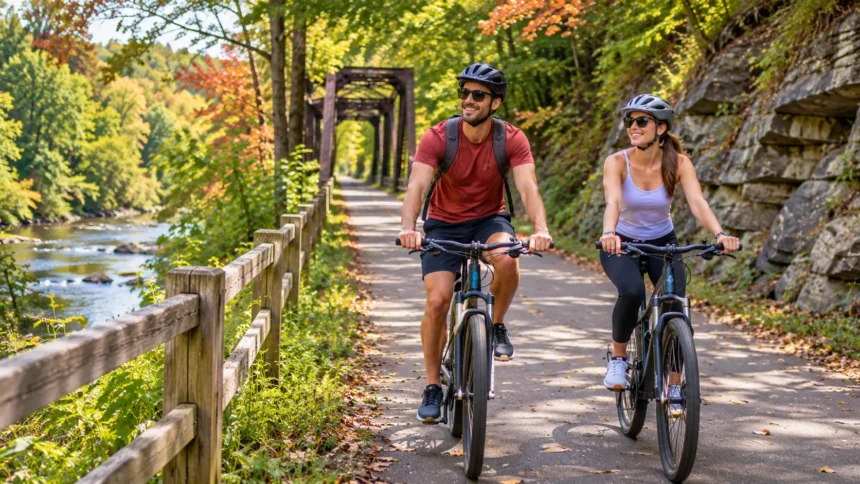
Rail-trails are commonly used for walking, cycling, jogging, and other permitted recreational activities. Depending on the location, some pathways also accommodate wheelchairs, mobility devices, or horseback riding. Trail surfaces may consist of asphalt, crushed limestone, compacted gravel, or other materials that influence accessibility and overall travel comfort throughout the year.
Organizations such as Rails to Trails Conservancy support the development, preservation, and expansion of recreational trail networks across the United States. These projects help communities create additional public spaces while preserving important aspects of railroad history. They also provide opportunities to connect neighborhoods, encourage outdoor recreation, and support businesses located near established trail routes.
Explore Katy Trail State Park in Missouri
Katy Trail State Park is one of the most famous rail-trails in the United States, extending approximately 240 miles between Clinton and Machens, Missouri. The pathway follows the former Missouri-Kansas-Texas Railroad corridor. Its surrounding landscapes include agricultural fields, riverside scenery, limestone bluffs, and historic communities that reflect the region’s cultural heritage.
The trail features numerous access points, allowing visitors to choose shorter sections instead of traveling the entire route. Communities such as Rocheport, Hermann, and Boonville offer opportunities to discover historic architecture, local restaurants, and independent businesses. Restored railroad depots along the pathway provide additional insight into Missouri’s transportation history and regional development.
The crushed limestone surface is suitable for walking and various types of recreational bicycles under appropriate conditions. Spring and autumn are particularly attractive seasons because of comfortable temperatures and colorful natural surroundings. Visitors should check current trail conditions, available facilities, and temporary closures before choosing a particular section of this extensive recreational pathway.
Discover the Great Allegheny Passage
The Great Allegheny Passage, commonly known as the GAP, extends approximately 150 miles between Pittsburgh, Pennsylvania, and Cumberland, Maryland. This scenic route passes through mountain landscapes, river valleys, historic communities, and former industrial areas. Its combination of natural beauty and transportation heritage makes it a popular destination for rail-trail enthusiasts.
Much of the pathway features a crushed limestone surface, although some urban sections are paved. Visitors can explore trail communities such as Ohiopyle, Connellsville, and Frostburg while discovering regional history and enjoying beautiful scenery. Historic railroad structures and impressive bridges provide additional points of interest throughout different sections of the route.
Travelers can select shorter day trips based on their interests, comfort levels, and available transportation. Several towns along the passage provide accommodation, restaurants, bicycle services, and other useful visitor facilities. Checking current trail alerts is particularly important because flooding, maintenance work, and seasonal tunnel restrictions can affect access to particular sections.
Visit the Trail of the Coeur d’Alenes in Idaho
The Trail of the Coeur d’Alenes is an impressive paved recreational pathway extending approximately 73 miles across northern Idaho. It connects the communities of Mullan and Plummer while passing through mountain valleys, wetlands, forests, and lakeside landscapes. Its smooth asphalt surface makes it an attractive option for visitors who prefer paved recreational routes.
One of the most memorable features of this trail is its beautiful scenery around Lake Coeur d’Alene and the surrounding river valley. Visitors may observe different bird species and other wildlife from designated public areas. Historic mining communities along the pathway also provide opportunities to learn about the region’s economic and cultural development.
The paved surface can make selected sections suitable for families, casual cyclists, and people using certain mobility devices. However, accessibility may vary according to individual trailhead facilities and surrounding terrain. Visitors should remain on designated pathways, respect environmental restrictions, and check official visitor information before planning their journey through northern Idaho.
Enjoy the George S. Mickelson Trail in South Dakota
The George S. Mickelson Trail is a scenic rail-trail extending approximately 109 miles through South Dakota’s Black Hills. It connects the communities of Deadwood and Edgemont while passing through forests, open grasslands, and distinctive rock formations. The route provides excellent opportunities to discover the natural beauty and transportation history of western South Dakota.
Historic railroad bridges and rock tunnels are among the interesting features found along this recreational pathway. Several trailheads provide access to different sections, allowing visitors to select manageable distances according to their preferences. The surrounding landscape changes considerably throughout the route, creating numerous opportunities for photography and relaxed outdoor sightseeing.
Unlike some urban rail-trails, the Mickelson Trail includes noticeable elevation changes and stretches where visitor services are limited. Trail passes are generally required for users aged 12 and older. Travelers should check official requirements, weather conditions, and facility availability before choosing a suitable section for their South Dakota outdoor experience.
Explore the High Line and Other Urban Rail-Trails
The High Line in New York City demonstrates how former railway infrastructure can become an attractive urban public space. Built on an elevated freight railroad on Manhattan’s West Side, this linear park stretches approximately 1.45 miles. It combines landscaped gardens, public artwork, seating areas, and interesting views of the surrounding city architecture.
Unlike many rural rail-trails, the High Line is designed primarily for pedestrians rather than cyclists. Visitors can enjoy seasonal plants, discover artistic installations, and appreciate the relationship between historic infrastructure and modern urban design. Its central location makes it convenient to combine with museums, neighborhood cafés, and other New York City attractions.
The Atlanta Beltline Eastside Trail is another interesting example of an urban pathway developed along a former railroad corridor. It connects neighborhoods, public spaces, artwork, and locally owned businesses. These urban destinations demonstrate that Rails to Trails projects can provide enjoyable sightseeing experiences without requiring extensive outdoor travel or remote countryside journeys.
Understanding the Great American Rail-Trail
The Great American Rail-Trail is an ambitious project designed to connect existing recreational pathways across the United States. Its planned route extends more than 3,700 miles between Washington, D.C., and Washington State. The project aims to create a connected network of trails that supports walking, cycling, recreation, and accessible transportation opportunities.
The proposed network incorporates numerous established rail-trails, greenways, and other multiuse pathways. These routes pass through different geographical regions, including agricultural communities, urban neighborhoods, river valleys, and mountainous landscapes. Connecting existing recreational infrastructure could provide additional opportunities for tourism, community development, and historical preservation across many parts of the country.
The Great American Rail-Trail is not yet a continuous, completed coast-to-coast route. Significant gaps remain between established sections, making it important to distinguish completed pathways from proposed connections. Visitors should use current official trail maps and choose open, established sections rather than assuming every part of the planned network is accessible.
Best Time of Year to Explore Rail-Trails
Spring is an excellent season for exploring many rail-trails because temperatures become more comfortable and natural landscapes develop fresh greenery. Flowers, flowing rivers, and changing woodland scenery provide attractive opportunities for outdoor sightseeing. However, rainfall can create muddy surfaces or temporary flooding, particularly along pathways located near rivers and low-lying areas.
Summer provides longer daylight hours and numerous opportunities to explore scenic trails and historic communities. Popular destinations may become busier during weekends and school holidays, especially around established visitor facilities. Bringing suitable clothing, drinking water, and sun protection can help travelers remain comfortable while enjoying outdoor activities during warmer seasonal conditions.
Autumn offers colorful foliage and cooler temperatures, making it particularly attractive for photography and relaxed sightseeing. Winter may provide quieter experiences along selected trails, although snow, ice, and reduced visitor services can affect accessibility. The best season ultimately depends on the destination’s climate, trail conditions, and the type of experience you prefer.
How to Choose the Right Rail-Trail Route
Start by determining whether you prefer a short recreational outing, a scenic day trip, or a longer vacation. Urban rail-trails often provide convenient access to restaurants, museums, and public transportation. Rural pathways offer more opportunities to discover natural landscapes, historic communities, and peaceful surroundings away from busy city environments.
Trail surfaces are another important factor when choosing an appropriate route. Paved pathways generally provide smoother movement, while crushed limestone and gravel surfaces may become uneven after heavy rainfall. Visitors with mobility requirements should review surface conditions, slopes, accessible parking, restroom facilities, and trailhead information before selecting a particular destination.
Consider the availability of drinking water, food, rest areas, transportation, and accommodation along your chosen route. Some countryside sections have considerable distances between visitor facilities, while urban trails usually provide more convenient services. Selecting a route that matches your individual needs helps create a comfortable experience without unnecessary physical demands or travel difficulties.
Essential Items to Bring on a Rail-Trail Trip
Comfortable clothing and suitable footwear are important when preparing for a rail-trail adventure. Choose clothing that matches the expected weather and allows comfortable movement throughout your outing. Bringing a lightweight jacket or additional layer can be useful when temperatures change, particularly in forested areas or regions with variable mountain weather.
Carry drinking water, suitable snacks, sun protection, and any necessary personal items. A charged smartphone and an offline trail map can also help you stay informed about established routes and nearby facilities. Cyclists should wear a properly fitted helmet and ensure their bicycles are in suitable working condition before traveling.
Avoid carrying unnecessary equipment that makes your outing more difficult or uncomfortable. For longer trips, confirm the availability of restrooms, food, drinking water, and return transportation before leaving. Preparing according to the length and location of your journey allows you to enjoy the scenery while remaining comfortable and appropriately equipped.
Important Rail-Trail Safety and Travel Tips
Rail-trails are shared public spaces, so following established trail etiquette helps everyone enjoy a safer experience. Keep to the appropriate side of the pathway, remain aware of other visitors, and follow posted instructions. Cyclists should travel at a considerate speed and communicate clearly before passing pedestrians or other trail users.
Check weather forecasts, official closure notices, and trail conditions before beginning your outing. Heavy rainfall, maintenance work, fallen trees, and flooding may temporarily affect access to particular sections. Never cross closed bridges, enter restricted tunnels, or leave designated pathways to explore abandoned railway structures that have not been approved for public access.
Respect wildlife, avoid disturbing natural habitats, and dispose of rubbish responsibly throughout your visit. Children and teenagers should explore unfamiliar or remote trails with a trusted adult and share appropriate travel plans with family members. Responsible recreational habits help protect both visitors and the historic environments that make these destinations enjoyable.
Conclusion
Rails to Trails projects provide a wonderful opportunity to discover scenic landscapes, historic railway infrastructure, and welcoming communities across the United States. From Missouri’s extensive Katy Trail to Idaho’s paved recreational pathways and New York City’s High Line, these destinations offer diverse experiences. Each route highlights a different combination of natural beauty, history, and local culture.
Choosing the right rail-trail involves considering travel distance, surface conditions, accessibility, weather, and available visitor facilities. Shorter sections can provide equally rewarding experiences without requiring extensive physical activity or complicated travel arrangements. Preparing suitable equipment, checking official trail information, and following recreational guidelines can help make your journey comfortable and enjoyable.
Whether you enjoy peaceful countryside walks, casual cycling, urban sightseeing, or discovering historic communities, rail-trails provide numerous opportunities to explore new destinations. Take time to appreciate your surroundings rather than focusing entirely on completing long distances. With thoughtful planning and responsible travel habits, a rail-trail vacation can become a memorable outdoor experience.
FAQs
What does Rails to Trails mean?
Rails to Trails refers to converting former railway corridors into public recreational pathways. These routes provide opportunities for walking, cycling, sightseeing, and other permitted activities while preserving important railroad heritage.
What are the best rail-trails in the United States?
Popular rail-trails include Katy Trail State Park, the Great Allegheny Passage, the Trail of the Coeur d’Alenes, and the George S. Mickelson Trail. Each offers distinctive landscapes and recreational experiences.
Are rail-trails suitable for beginners?
Many rail-trails feature gentle gradients and relatively smooth surfaces, making shorter sections suitable for beginners. However, accessibility, elevation changes, surface quality, and available facilities vary between individual destinations.
Is the Great American Rail-Trail complete?
No, the Great American Rail-Trail remains under development. Although numerous established sections are available, significant gaps remain within the proposed coast-to-coast recreational network across the United States.
Do you have to pay to use rail-trails?
Many rail-trails offer free public access, while some require admission fees or recreational passes. Parking, bicycle rentals, accommodation, and other visitor services may involve additional expenses depending on the destination.