

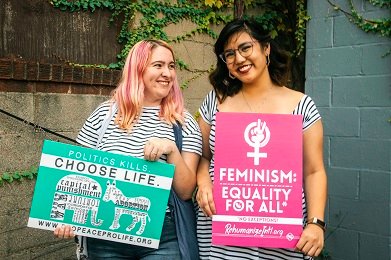
Political views are foundational beliefs that shape an individual’s perspective on governance, society, and their role within it. These beliefs often emerge from a combination of personal experiences, cultural background, and social interactions. As individuals navigate their environments, these views provide a framework through which they interpret political events, policy decisions, and societal issues. Over time, political views can solidify into long-standing identities that significantly influence one’s decisions and behaviors.
The significance of change in political views lies not only in their capacity to guide individual opinion but also in their ability to shape collective societal norms. When people share similar political beliefs, it can lead to the formation of communities that reinforce these views, making them feel validated and perpetuated within social circles. This aspect is particularly evident in today’s polarized political landscape, where individuals often gravitate towards like-minded groups, further entrenching their ideologies.
Moreover, the process of change in political views is often fraught with challenges. As people age and accumulate experiences, their previously held beliefs may start to feel deeply ingrained, almost as if they were part of their identity. The emotional attachment to these beliefs can spark resistance to new ideas or opposing viewpoints, making individuals hesitant to reconsider their political stance. This resistance can also be exacerbated by cognitive biases, where individuals favor information that aligns with their existing beliefs while dismissing contradictory evidence.
In essence, understanding the nature of political views and the difficulty in changing them is critical in addressing contemporary political discourse. Recognizing the factors that contribute to the resistance to political change is vital for fostering constructive dialogue and promoting an environment where varying perspectives can be shared and discussed respectfully.
The Psychological Factors Behind Resistance
Understanding the resistance to changing political views can be significantly enhanced by examining the psychological mechanisms at play. Two central concepts in this discussion are cognitive dissonance and confirmation bias. Cognitive dissonance refers to the mental discomfort experienced when an individual is confronted with new information that contradicts their existing beliefs. This discomfort often leads to a desire to reduce the inconsistency, which can manifest in various ways. Typically, individuals might reject, dismiss, or rationalize the new information in order to maintain their original beliefs. This resistance can be particularly pronounced in the realm of political views, where such beliefs are often deeply intertwined with personal identity.
On the other hand, confirmation bias plays a crucial role as well. It is the tendency of individuals to seek out, interpret, and remember information in a way that confirms their pre-existing beliefs. This phenomenon can lead to selective exposure, where individuals engage only with sources that reinforce their existing opinions. When people encounter political discussions or debates, they may find themselves gravitating towards viewpoints that affirm their beliefs, thereby creating echo chambers that hinder the acceptance of alternative perspectives. Consequently, the interplay of cognitive dissonance and confirmation bias creates a formidable barrier against the evolution of political views, making it challenging for individuals to embrace new insights.
Moreover, these psychological factors are not merely academic concepts; they have profound implications in real-world scenarios. For instance, polarized political environments can exacerbate these phenomena, leading to entrenched divisions and reduced rational discourse. By acknowledging and understanding these psychological factors, individuals and societies can better navigate the complexities of political dialogue, promoting a more constructive exchange of ideas.
The Role of Identity and Group Affiliation
Political views are often deeply embedded in one’s sense of self, interwoven with aspects of social identity such as race, religion, geography, and socio-economic status. These elements create a framework through which individuals perceive the world, influencing their political beliefs and opinions. Consequently, when a person contemplates altering their political stance, it may feel as if they are not only changing their beliefs but also jeopardizing a part of their identity.
Group affiliation plays a significant role in this dynamic. Humans have an innate tendency to seek belonging, and political communities provide a vital sense of identity and connection. The ideologies upheld by these groups often shape a member’s values and worldviews, making it challenging for individuals to diverge from these beliefs. For instance, changing one’s political stance can lead to feelings of alienation—individuals fear that they may no longer belong or be accepted within their social circles. This sense of belonging is especially potent in tightly-knit communities where group loyalty is paramount.
Moreover, the notion of betrayal arises when individuals consider embracing differing political ideologies. Aligning with opposition views may be seen as a rejection of shared values and commitments, which can provoke strong emotional responses among community members. In many instances, the fear of ostracization outweighs the desire for personal growth, leading individuals to maintain their existing political views, even when they may disagree internally.
Thus, identity and group affiliation are central to understanding resistance to changing political views. This resistance reflects broader implications within social dynamics, pinpointing the complexities of human relationships tied to communal identity and the inherent challenges in navigating a diverse ideological landscape.
Influence of Social Media and Information Sources
The rise of social media has fundamentally altered the way individuals consume information and interact with diverse views, particularly in the political realm. Platforms such as Facebook, Twitter, and Instagram have created environments that favor the proliferation of personalized content. Algorithms prioritize content that aligns with users’ previous interactions, resulting in what is commonly referred to as echo chambers. These echo chambers significantly propel the entrenchment of political views by repeatedly exposing users to similar opinions and narratives that confirm their beliefs.
Moreover, the information landscape today is incredibly varied, ranging from mainstream news outlets to personal blogs and user-generated content. As individuals navigate this complex environment, it can become increasingly challenging to discern credible sources from those that promote misinformation or biased reporting. This overwhelming volume of information often leads to cognitive overload, compelling users to retreat into familiar ideological spaces where opposing viewpoints are minimized or entirely excluded.
Furthermore, the interactive nature of social media platforms allows users not only to consume but also to produce content, thereby enhancing their engagement in political discussions. While this democratization of information can foster a greater variety of perspectives, it also carries the risk of amplifying divisive rhetoric. Users may gravitate toward content that validates their existing beliefs, reinforcing a sense of certainty about their political preferences and isolating themselves from dissenting opinions.
As such, the influence of social media and the broader information ecosystem serves to entrench political views, making it increasingly difficult for individuals to encounter diverse perspectives that challenge their long-held beliefs. This phenomenon not only affects personal viewpoints but can also lead to societal polarization, as the lines between discourse and extreme partisanship become increasingly blurred.
Impact of Life Experiences and Socioeconomic Factors
Political views are often shaped significantly by an individual’s personal life experiences and socioeconomic status. These elements intertwine to form a complex web that solidifies belief systems, making individuals less open to altering their perspectives. For many, the value systems imparted during formative years set the stage for lifelong political ideologies. An upbringing in a family that prioritizes certain values, such as social justice or fiscal conservatism, can deeply influence one’s inclination towards specific political outcomes.
Furthermore, socioeconomic factors play a crucial role in the development of political views. Individuals from affluent backgrounds may have different priorities and worldviews compared to those from lower socioeconomic classes, primarily due to their distinct life experiences. Wealth can afford individuals access to higher education, which may influence their views on matters like taxation, healthcare, and social welfare. Conversely, those from less privileged backgrounds may prioritize policies that directly address economic inequality, which is often shaped by direct personal experiences of hardship.
The impact of life experiences and socioeconomic situations on political views can also lead to a certain rigidity in one’s belief system. When individuals encounter life events that reaffirm their existing beliefs—whether it be job loss, a health crisis, or witnessing social injustices—they may become entrenched in their perspectives. Such experiences often create a sense of identity tied to specific political beliefs, thereby encouraging resistance to alternative viewpoints.
Consequently, understanding how personal life experiences and socioeconomic factors influence political views is essential for comprehending the broader landscape of political resistance. Recognizing these influences can foster dialogue that may ultimately bridge the divides between differing political ideologies, paving the way for a more inclusive discourse.
The Fear of Social Repercussions
In today’s politically charged environment, altering one’s political beliefs can summon a variety of social repercussions. Many individuals grapple with the fear of being ostracized or judged by their peers, family, and friends if they choose to embrace new ideologies. This apprehension often stems from the deeply entrenched nature of political affiliations, where a shift in opinion can be perceived not just as a personal change but as a betrayal of one’s social group.
The desire for social acceptance plays a pivotal role in this reluctance to change. When individuals consider modifying their political views, they often weigh the potential backlash against the benefits of adopting new perspectives. For instance, they might worry about facing criticism or losing long-standing relationships, which can deter them from openly discussing or exploring different viewpoints. The fear of disapproval can create a significant barrier, compelling people to maintain the status quo rather than risk the discomfort associated with changing their political affiliations.
Moreover, the impact of social media cannot be overlooked in this context. Online platforms amplify the voices of dissent and often serve as echo chambers, wherein shifting one’s stance might lead to being shunned or ridiculed. This fear can be so profound that individuals may self-censor their thoughts and beliefs, opting for silence over expressing their evolving opinions. Thus, the threat of social repercussions acts as a formidable obstacle in the journey towards progressive thought and understanding, leading to a cycle where individuals remain tethered to their existing convictions, despite any desire for change.
The Role of Education and Critical Thinking
Education plays a pivotal role in shaping individuals’ political views and their ability to engage in critical thinking. Through formal education, individuals are often exposed to a variety of ideologies, perspectives, and historical contexts, which can significantly influence their understanding of political systems and issues. Higher education, in particular, can foster environments that encourage students to challenge preconceived notions and analyze information from multiple angles.
Critical thinking skills, cultivated through educational experiences, are essential for developing flexibility in political beliefs. These skills enable individuals to evaluate arguments, identify biases, and scrutinize the sources of information. As individuals engage with divergent viewpoints during their academic pursuits, they become more adept at processing complex political issues beyond the binaries often presented in everyday discourse. This exposure to diverse perspectives can lead to a more nuanced understanding of political affairs.
Research has suggested that individuals with higher levels of education are more likely to reconsider and adapt their political affiliations and opinions over time. This adaptability can stem from the analytical skills and intellectual openness fostered through educational frameworks. However, it is important to note that while higher education may equip individuals to think critically about political issues, it does not guarantee a shift in political ideology. Factors such as cultural background, personal experiences, and social influences also play significant roles in an individual’s willingness to change their views.
In summary, the interplay between education and political beliefs is complex. While education enhances critical thinking abilities, promoting greater flexibility in engaging with political issues, it remains one of several influences that guide individuals’ political ideologies. Understanding this relationship is vital for fostering more productive political discussions and encouraging engagement with differing opinions.
Case Studies of Political Ideological Change
Examining case studies of individuals or groups who have undergone significant shifts in their political ideologies provides insight into the dynamics of belief transformation. One notable case is that of individuals who initially identified as staunch supporters of a specific political party but underwent a profound change in perspective due to exposure to diverse opinions and experiences. For instance, some former members of politically polarized communities have shared stories of how interactions with individuals from opposing viewpoints led them to reevaluate their understanding of complex issues.
Such transformative experiences often occur during critical junctures in a person’s life. A poignant example is found among veterans who return home after active duty and begin to question the motivations behind military interventions. Their first-hand experiences often provide a unique lens through which to examine the realities of longstanding political narratives. Through engagement with education programs, discussions with social advocates, or community involvement, many veterans shift from a rigid allegiance to their original beliefs to a more nuanced understanding of political matters.
Another significant factor contributing to ideological change is the role of social media. In today’s digital age, individuals confronted with a barrage of diverse viewpoints can undergo rapid shifts in their perspectives. Through targeted exposure to conflicting information and dialogues within online forums, some users have notably adjusted their political stance. The power of grassroots movements amplifying certain messages has also been crucial. Social movements, such as climate activism, have spurred long-time skeptics to reconsider their positions in light of compelling data and persuasive communal discussion.
While not every individual will experience a complete ideological transformation, these cases illustrate the potential pathways for change. By understanding the conditions that facilitate this evolution, we gain insight into overcoming resistance to altering political views, ultimately fostering a more inclusive and deliberative society.
Conclusion: Encouraging Openness to Change
The resistance to changing political views is a complex phenomenon influenced by various factors, including identity, fear of social exclusion, and cognitive dissonance. Understanding these underlying reasons can help facilitate a more open and fruitful dialogue between individuals with differing perspectives. It is essential to acknowledge that political beliefs are often intertwined with personal identity, making shifts in opinions not just a matter of rational debate but also emotional and social consideration.
One effective way to encourage openness is by fostering environments conducive to dialogue. Communities and individuals can create spaces where diverse viewpoints are respected and welcomed, minimizing the fear of confrontation or ridicule. This can be achieved through organized discussion forums, community meetings, or online platforms that prioritize constructive discussions over divisive rhetoric.
Moreover, promoting media literacy is crucial. Equipping individuals with the skills to critically consume political information can help mitigate the influence of biases and misinformation. Educational initiatives that encourage critical thinking about sources, motivations, and the framing of issues can also play a significant role in nurturing a flexible mindset.
Encouraging self-reflection is another vital aspect. Individuals should be reminded of the importance of questioning their own beliefs and the sources of influence that shape those beliefs. Engaging with diverse perspectives can promote empathy and understanding, allowing for a more nuanced view of contentious issues.
In conclusion, while the resistance to changing political views is a natural aspect of human psychology, promoting a culture of openness and dialogue is essential. By implementing strategies such as facilitating respectful conversations, enhancing media literacy, and fostering self-reflection, individuals and communities can create an environment where flexible thinking thrives, ultimately leading to a more constructive political discourse.