

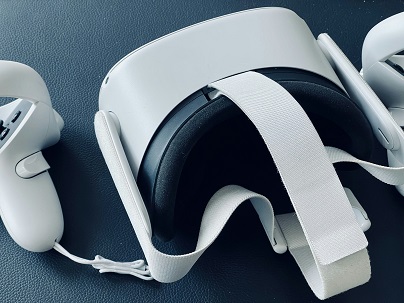
Virtual Reality (VR) and Augmented Reality (AR) represent two significant technological advancements in the realm of immersive experiences. Both of these fields utilize sophisticated hardware and software to create environments that engage users in ways traditional media cannot. VR immerses users completely in a simulated environment, whereas AR overlays digital information onto the real world, enhancing the user’s perception of their surroundings.
The core principle of Virtual Reality involves the use of headsets equipped with sensors to transport users into a computer-generated space. This technology aims to replicate a sense of presence, allowing users to interact with a three-dimensional environment as if they were physically present within it. VR is primarily applied in sectors where complete immersion is essential, such as gaming, training simulations, and therapeutic practices.
On the other hand, Augmented Reality serves a different purpose, primarily focused on enriching the real-world experience rather than creating an entirely new one. AR technology employs devices like smartphones or AR glasses to project digital images, videos, or information onto the physical world. This enables users to view and manipulate virtual objects alongside their real-world environment. Applications of AR can be found in education, retail, and even navigation systems, providing valuable supplementary information in real-time.
While VR often requires extensive hardware and dedicated setups, AR can be accessed through commonly available devices like smartphones, making it more accessible to the average consumer. Ultimately, understanding the distinctions and operational principles of VR and AR is crucial for recognizing their unique contributions to technology and how they might evolve in the future.
Current Trends in VR and AR Technologies
The landscape of virtual reality (VR) and augmented reality (AR) technologies is rapidly evolving, with significant advancements shaping their future. One noticeable trend is the enhancement of hardware capabilities, which has seen the introduction of more powerful and compact devices. Companies such as Oculus, HTC, and Sony are leading the charge, offering headsets that feature improved resolutions, wider fields of view, and enhanced tracking systems. These hardware developments are crucial for creating immersive environments that engage users in unprecedented ways.
In addition to hardware, software developments are also pushing the boundaries of what VR and AR can achieve. For instance, advancements in rendering techniques and real-time graphics processing have enabled the creation of more realistic and interactive experiences. Game developers and content creators are leveraging new engines, such as Unity and Unreal Engine, to design rich virtual environments that appeal to a variety of users. Furthermore, the integration of artificial intelligence into VR and AR applications is beginning to provide personalized experiences that adapt to individual user behaviors and preferences.
The rollout of 5G technology has emerged as a game-changer for VR and AR applications by offering faster data transfer rates, reduced latency, and increased connectivity. This allows for more seamless streaming of high-quality VR content and enhances AR applications that rely on real-time data processing. By enabling complex interactions without lag, 5G is set to revolutionize user experiences across various sectors, from gaming to education and beyond.
Moreover, several key players in the market are investing heavily in research and development to drive innovation. Companies like Microsoft and Apple are exploring mixed realities, blending elements of both VR and AR to enrich user engagement. The convergence of these technologies indicates a bright future where virtual and augmented realities will become integral to everyday life.
Applications of VR and AR Across Industries
Virtual Reality (VR) and Augmented Reality (AR) technologies are rapidly transforming a myriad of industries, enhancing user experiences and providing innovative solutions to traditional challenges. In the gaming industry, VR has revolutionized gameplay by immersing players in 3D environments, allowing for a more engaging and interactive experience. Titles like Beat Saber and Half-Life: Alyx exemplify how VR can create captivating and emotional experiences, changing how gamers interact with their digital landscapes.
Similarly, the education sector has embraced AR and VR to create immersive learning experiences. These technologies have enabled students to explore complex subjects in a more dynamic manner. For instance, medical students can perform virtual surgeries, while history classes can transport students back in time to engage with historical events in a more tangible way. This immersive learning model not only aids retention but also encourages active participation.
The healthcare industry also benefits significantly from VR and AR applications. Surgeons can utilize AR to overlay critical patient information in their field of view during operations, thereby enhancing accuracy and safety. Additionally, VR is employed in therapeutic settings, helping patients confront fears and anxieties through controlled environments, leading to improved mental health outcomes.
In the realm of real estate, VR is altering property listings by offering virtual tours, enabling potential buyers to explore homes without the need for physical visits. This approach streamlines the buying process and expands reach to clients located anywhere in the world. Retail is also evolving with AR applications; businesses like IKEA use AR to allow customers to visualize furniture in their own homes before making a purchase, thereby enhancing consumer satisfaction.
Overall, the incorporation of VR and AR across these diverse industries illustrates a significant shift in operational methodologies. As these technologies develop further, their transformative impact on traditional practices is likely to continue shaping the future of multiple sectors.
The Social Implications of VR and AR
The advent of virtual reality (VR) and augmented reality (AR) technologies is reshaping the social landscape, fundamentally altering how individuals communicate and interact. These immersive environments offer novel platforms for social engagement, enhancing experiences through 3D interactions and lifelike simulations. However, alongside their benefits come significant implications that warrant careful consideration.
VR facilitates virtual gatherings, allowing individuals from diverse geographical locations to connect in shared digital spaces. This can enrich communication by providing a sense of presence, enabling users to feel as though they are together, despite physical distance. Likewise, AR enhances real-world experiences by overlaying digital content onto physical environments, thereby fostering social interactions enriched with contextual information. Such capabilities can bolster community connections, promote shared experiences, and enhance collaborative endeavors.
However, the very nature of these technologies raises ethical questions, particularly concerning privacy and digital identity. Users may generate and share vast amounts of personal data while navigating virtual environments, presenting concerns regarding surveillance and data ownership. Additionally, as individuals curate their online personas through VR and AR platforms, there is the risk of fragmentation between one’s digital identity and real-world self, which can provoke feelings of disconnection or isolation.
The dual nature of VR and AR in social environments—both fostering connections and potentially facilitating isolation—calls for a nuanced understanding of their societal implications. It is crucial to address these ethical considerations as society increasingly adopts these technologies. The future will likely hinge on balancing the benefits of enhanced communication with the responsibility to protect individual privacy and digital integrity.
Challenges Facing the Adoption of VR and AR
The adoption of Virtual Reality (VR) and Augmented Reality (AR) technologies is not without its hurdles, stemming from various challenges that companies and users face. One significant barrier is the high cost associated with high-quality VR and AR hardware and software. The development of advanced headsets and AR glasses often requires substantial investment, which can deter both consumers and businesses from integrating these technologies into their operations. Furthermore, not only is acquisition expensive, but also the ongoing maintenance and upgrades of systems contribute to the overall financial burden.
Another challenge is the technical limitations inherent in current VR and AR technology. Issues such as latency, resolution, and field of view can compromise user experience. Slow response times may disrupt immersion and cause discomfort, negatively affecting how users perceive augmented environments. Additionally, many existing applications rely heavily on complex software that may not perform optimally across all devices, leading to fragmented experiences.
User experience remains a crucial factor in the successful adoption of VR and AR. Many potential users may feel intimidated by the technology, finding the initial learning curve steep compared to traditional forms of interaction. There are also social concerns regarding motion sickness and the potential health risks associated with prolonged use of VR headsets. The need for user-friendly interfaces and ergonomic designs is vital to attract a wider audience.
Finally, the market is still in its infancy, necessitating standardization and regulation to guide development and ensure user safety. A cohesive framework can facilitate interoperability among different VR and AR solutions, helping to build trust and encourage adoption. Addressing these challenges will be crucial for the future growth and acceptance of VR and AR technologies.
Future Innovations on the Horizon
The future of virtual reality (VR) and augmented reality (AR) is poised to experience significant innovations that will redefine user experiences and interactions. As technology progresses, the integration of artificial intelligence (AI) in VR and AR is expected to open up new avenues for personalized and interactive experiences. For instance, AI-driven algorithms can analyze user behavior, preferences, and reactions in real-time, allowing for adaptive environments that respond dynamically to individual users. This personalization could lead to more engaging gaming experiences, tailored educational environments, and customized training simulations.
Moreover, advancements in sensory technology are anticipated to enhance the overall immersion of VR and AR experiences. Innovations may include more effective haptic feedback systems, which simulate touch and physical sensations. By incorporating these systems alongside visual and auditory feedback, users can experience a more cohesive and believable virtual environment. As research into brain-computer interfaces progresses, it may soon be possible for users to engage with virtual spaces using mere thoughts, eliminating the need for traditional controllers altogether. This leap in sensory interaction will profoundly impact gaming, therapy, and therapeutic methods.
Furthermore, the development of more sophisticated AR environments is on the horizon. This may include seamless blending of the digital and physical worlds, enabling users to interact with digital objects embedded in real-world settings in a more intuitive manner. Enhanced location-based AR experiences could change the way users consume information, engage with businesses, and navigate environments by infusing their surroundings with contextual overlays and interactive elements.
Such innovations in virtual and augmented reality hold the potential to reshape user interactions fundamentally, establishing new applications across various sectors, including education, healthcare, and entertainment. As these technologies continue to evolve, it will be fascinating to observe how they influence social dynamics, personal experiences, and professional landscapes.
The Role of VR and AR in Training and Education
Virtual Reality (VR) and Augmented Reality (AR) are transforming traditional training and educational methodologies, providing immersive and interactive learning experiences. These technologies facilitate environments where users can engage with course content in ways that were previously impossible. By integrating VR and AR into their curricula, educational institutions and professional training programs enhance learner engagement, comprehension, and retention.
One prominent example of VR in education is its use in medical training. Medical students can engage in simulative surgeries with lifelike 3D models, gaining hands-on experience without the associated risks. Such applications allow for repeated practice and mastery of complex procedures, which significantly boosts confidence and preparation for real-life situations. Similarly, AR can overlay digital content onto physical environments, allowing trainees in fields such as engineering or architecture to visualize complex concepts in 3D, thereby deepening their understanding.
In the realm of corporate training, companies are utilizing VR for onboarding and skills upgrading. This approach enables employees to train in a controlled environment that mimics actual workplace scenarios. For instance, retail employees can practice customer service skills or emergency response techniques in a virtual store setting. This experiential learning leads to better retention of information and improved workplace performance. Moreover, organizations report reduced training costs due to the efficiency of VR and AR applications.
Educational institutions are also leveraging these technologies to create engaging classroom environments. Lessons can come alive through AR, where students might study historical events by interacting with virtual simulations, fostering a deeper understanding of context and consequences. As educators and trainers continue to explore the potentials of VR and AR, it is evident that these technologies will play a fundamental role in the future of training and education, making learning more dynamic and effective.
Potential Impact on Daily Life
As virtual reality (VR) and augmented reality (AR) technologies continue to advance, their integration into daily life will likely transform various aspects of human interaction and experience. One of the most significant potential impacts is enhanced navigation systems. Imagine walking through a city with an AR application overlaying real-time information on the environment around you. This could include directions, points of interest, and even real-time public transport updates, providing a seamless blending of digital information with the physical world.
The realm of shopping presents another exciting avenue for integration. Augmented reality could revolutionize the retail experience by allowing consumers to visualize products in their own space before making a purchase. For example, using AR technology, one could virtually place a piece of furniture in their living room to see how it fits with the existing decor. This level of interactivity can lead to more informed purchasing decisions, reducing return rates and enhancing customer satisfaction.
Moreover, social interactions are poised to be redefined through virtual gatherings. VR platforms can create immersive environments where friends and family members can meet and interact as if they were in the same physical space. These virtual experiences would enable people to connect regardless of geographical barriers, thereby making social engagements more accessible and enriching. However, it is critical to consider the balance between virtual and real-world interactions. While these technologies can enhance experiences, fostering genuine, face-to-face relationships remains essential for maintaining the depth of human connections.
In summary, the integration of VR and AR into daily life promises a future where navigation, shopping, and social interactions evolve beyond current capabilities. Striking the right balance between enhancing reality and preserving authentic human engagement will be vital as these technologies progress.
Conclusion and Future Outlook
As we reflect on the advancements and discussions surrounding Virtual Reality (VR) and Augmented Reality (AR), it becomes increasingly clear that these technologies hold remarkable potential for transforming various aspects of human experience. The immersive qualities of VR, alongside the interactive enhancements offered by AR, could redefine our perceptions of reality, learning, entertainment, and even social interactions.
The growth trajectory of VR and AR suggests a future where these technologies become more accessible and integral to everyday life. With continued investments in research and development, we can anticipate significant improvements in hardware and software, leading to richer experiences. Enhanced graphics, more responsive environments, and decreased latency may soon allow users to navigate virtual landscapes seamlessly, thereby increasing the realism of simulations in fields like education and training.
Moreover, the convergence of VR and AR with other emerging technologies, such as artificial intelligence and 5G connectivity, could further accelerate their adoption. AI could facilitate more personalized experiences in these virtual spaces, while faster connectivity would reduce delays, making these applications even more viable for real-time interaction.
As we move toward this exciting future, ethical considerations must also be addressed. Ensuring user privacy, maintaining content safety, and preventing addiction to these immersive environments will be crucial. The balance of fostering innovation while safeguarding human well-being will define the trajectory of VR and AR developments.
In conclusion, the future of VR and AR appears bright, filled with potential for enhancing human engagement and enriching daily experiences. With ongoing advancements, we stand on the brink of a new era where virtual and augmented realities are seamlessly integrated into the fabric of our lives.