
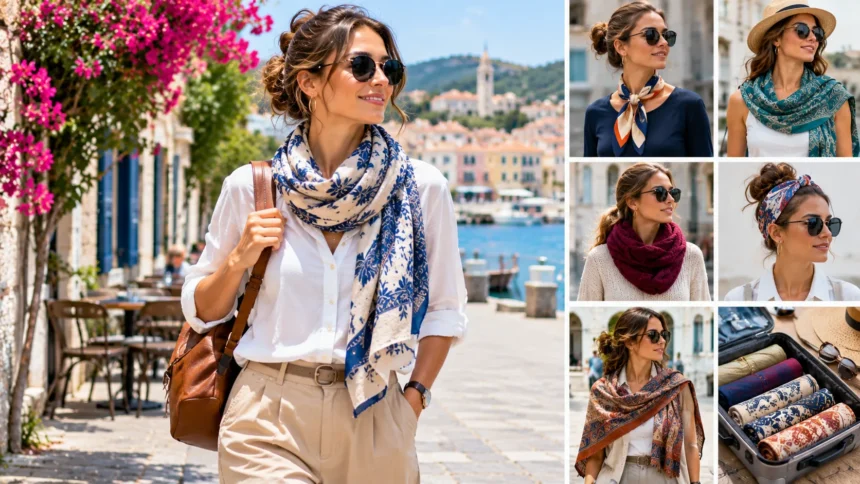
Travel scarf styling is a simple way to add comfort, versatility, and personality to your outfits while exploring new destinations. A scarf can provide an extra layer in cooler weather, protect your neck from wind, or add color to an otherwise simple travel look. Depending on its material and size, it can also serve as a lightweight accessory for different occasions. Learning how to style a travel scarf makes packing easier and helps you create practical outfits.
Whether you’re preparing for a weekend city break, a long flight, or an international vacation, choosing the right scarf can make a difference. Lightweight scarves work well in warm destinations, while thicker fabrics provide additional warmth during winter trips. The best styling techniques balance comfort, convenience, and personal preferences. This guide explores travel scarf styling ideas, fabric choices, packing tips, common mistakes, and practical ways to wear scarves throughout your journey.
What Is Travel Scarf Styling?
Travel scarf styling involves choosing and wearing scarves in ways that complement different travel outfits and activities. Rather than treating a scarf as a purely decorative accessory, travelers can use it for warmth, coverage, and convenience. The same scarf may work with casual daytime clothing or a more polished evening outfit. Its versatility makes it a useful addition to many travel wardrobes.
Scarves come in different shapes, including long rectangular scarves, square neck scarves, and oversized wraps. Each design offers different styling possibilities based on fabric, size, and personal preference. A long scarf can be loosely wrapped around the neck, while a square scarf can be folded into a compact accessory. Understanding these differences helps travelers choose styles that suit their needs.
Travel scarf styling also involves considering weather conditions, planned activities, and available luggage space. A heavy winter scarf may be useful in cold environments but uncomfortable in tropical destinations. Similarly, delicate fabrics may require more care during outdoor adventures. Selecting practical designs allows travelers to enjoy the benefits of scarves without carrying unnecessary accessories.
Why Scarves Are Useful Travel Accessories
One major advantage of traveling with a scarf is its ability to serve several different purposes. It can provide warmth in air-conditioned spaces, add coverage during cooler evenings, or complete a simple outfit. Some larger scarves can also be worn as wraps. This flexibility is especially useful when luggage space is limited.
Scarves can help travelers adapt to changing temperatures throughout the day. A destination may feel warm in the afternoon but cooler after sunset. Carrying a lightweight scarf provides an easy additional layer without requiring a bulky jacket. However, the amount of warmth depends on the material, thickness, and way the scarf is worn.
Another benefit is the ability to create outfit variety with relatively few clothing items. A patterned scarf can add visual interest to a plain shirt, dress, or jacket. Changing how it is folded or tied produces different looks without requiring another complete outfit. This makes scarves particularly appealing for travelers who prefer packing compact wardrobes.
How to Choose the Right Travel Scarf
Choosing a travel scarf begins with understanding the climate and activities planned for your destination. Lightweight cotton or linen scarves are often comfortable in warmer environments. Wool and other insulating materials may be more suitable for cold-weather trips. Consider whether the scarf will be worn mainly outdoors, during transportation, or as an everyday accessory.
Fabric texture is another important factor because scarves sit close to the neck and face. Soft materials can feel comfortable during long periods of wear, while rough fabrics may cause irritation. Some travelers prefer smooth modal or lightweight woven scarves for everyday use. Others choose natural fibers based on breathability, warmth, and personal comfort.
Size and shape also influence how easily a scarf can be styled. A compact square scarf fits neatly into a small bag and works well for simple neck knots. Longer scarves offer more wrapping options, while oversized designs can provide additional coverage. Choosing a manageable size helps prevent the accessory from becoming inconvenient during busy travel days.
Best Travel Scarf Fabrics for Different Weather
Cotton scarves are popular for travel because they are widely available, comfortable, and relatively easy to maintain. Lightweight cotton works particularly well for casual outfits in mild or warm weather. Depending on the weave, it may provide breathable coverage without feeling overly heavy. Cotton scarves also come in many colors and patterns, making them easy to coordinate.
Linen scarves are another useful option for destinations with warm temperatures. The fabric is generally breathable and has a relaxed texture that works well with casual clothing. However, linen wrinkles easily, which may not suit travelers seeking a consistently smooth appearance. A loosely woven linen scarf can still provide an appealing, practical addition to summer outfits.
For colder climates, wool and cashmere scarves offer greater insulation than many lightweight fabrics. Wool can provide warmth while managing moisture, although some varieties may feel itchy against sensitive skin. Cashmere is often softer but may require more careful handling. Synthetic blends are also available and can provide useful warmth, durability, and easier maintenance at different price points.
Easy Ways to Style a Scarf for Travel
The classic neck drape is one of the easiest travel scarf styling techniques. Simply place the scarf around the back of your neck and allow both ends to hang naturally in front. This approach works particularly well with long rectangular scarves and lightweight jackets. It adds a relaxed finishing touch without requiring complicated knots or adjustments.
Another practical option is a loose single-loop style around the neck. This provides a little more coverage while allowing the scarf to remain comfortable. Avoid wrapping it tightly, especially during activities that require frequent movement. The loose-loop style pairs easily with T-shirts, sweaters, denim jackets, and casual travel coats.
A simple front knot can create a more structured appearance for everyday sightseeing or dining. Fold or position the scarf comfortably, then tie a relaxed knot near the front of your outfit. Adjust the ends so they do not interfere with movement. This styling approach works especially well with soft, medium-length scarves that hold their shape without feeling bulky.
How to Wear a Travel Scarf on Long Flights
Airplane cabins can feel cool, making a lightweight scarf a convenient accessory for long flights. A soft rectangular scarf can provide extra neck coverage without requiring a heavy outer layer. Choose a fabric that feels comfortable when sitting for extended periods. Avoid complicated wrapping styles that become restrictive when resting or moving around the cabin.
An oversized scarf may also function as a light wrap across the shoulders when additional warmth is needed. However, it should not interfere with seat belts or create loose fabric around walkways. Keep the scarf arranged so you can move comfortably and follow cabin safety instructions. Practicality is more important than maintaining a particular appearance during the flight.
After landing, the same scarf can become part of your everyday travel outfit. A simple neck drape works well when walking through the airport or reaching your accommodation. If the weather becomes warmer, fold the scarf and place it inside your carry-on bag. This flexibility makes it useful for travelers moving between different temperatures.
Travel Scarf Styling for Summer Vacations
Summer travel scarves should generally feel lightweight, breathable, and comfortable against the skin. Cotton, linen, and other airy fabrics are useful options for warm-weather destinations. A small square scarf can complement a simple shirt or casual dress. Lighter materials are often easier to carry when temperatures rise during sightseeing.
A loosely tied neck scarf can add detail to a basic summer outfit without requiring additional layers. Bright colors and playful patterns work well with neutral clothing, while solid scarves create a quieter appearance. The best choice depends on personal taste and the rest of the outfit. Keep the knot comfortable and avoid excessive fabric around the neck in hot weather.
Scarves can also provide temporary coverage in situations where modest clothing is appropriate. For example, some religious or cultural sites may have specific dress requirements for visitors. A larger scarf may help provide shoulder or head coverage when permitted by the site’s rules. Always check local guidance rather than assuming one scarf will meet every dress requirement.
Travel Scarf Styling for Winter Destinations
Winter scarf styling focuses primarily on warmth, comfortable layering, and protection from cold conditions. A thicker wool scarf can help cover the neck and reduce exposure to chilly air. Pairing it with a suitable winter coat creates a practical combination for outdoor sightseeing. The scarf should fit comfortably without restricting breathing or head movement.
The simple overcoat drape creates a classic look that works with different winter clothing styles. Place the scarf around your neck and arrange the ends over or inside your coat. For additional warmth, a loose wrap can provide more coverage around the neck. Avoid excessive bulk that makes it difficult to close your outerwear comfortably.
Color coordination can also make winter outfits feel more interesting without requiring many accessories. A neutral coat can pair with a patterned scarf, while a colorful jacket may work well with a solid design. Coordinating gloves and hats can create a consistent overall appearance. However, comfort and weather protection should remain the main priorities during cold-weather travel.
How to Style a Scarf for City Sightseeing
City sightseeing often involves walking, public transportation, museums, restaurants, and changing weather conditions. A lightweight scarf can add variety to practical clothing without making the outfit complicated. Pair a simple scarf with a comfortable shirt, trousers, and suitable walking shoes. This combination works well for many casual urban activities.
A small square scarf tied loosely around the neck is a useful choice for city outfits. It stays relatively compact and can add color to neutral clothing. Alternatively, a longer scarf can be draped over a lightweight jacket. Choose a style that remains comfortable when carrying a backpack or moving through crowded areas.
Practical travel accessories should not distract from sightseeing or interfere with everyday movement. Avoid long, unsecured scarf ends when cycling, using escalators, or moving near machinery. A compact knot or neatly tucked scarf can reduce the risk of snagging. Selecting simple styling methods makes it easier to enjoy the destination without frequently adjusting your clothing.
How to Wear a Scarf With Dresses and Casual Outfits
Scarves work well with dresses because they add a different texture or color without changing the entire outfit. A lightweight scarf can be draped around the shoulders during cooler evenings. Smaller scarves may be tied around the neck for a more structured appearance. These options are useful for casual dining, shopping, and relaxed sightseeing.
For everyday outfits, scarves pair easily with T-shirts, sweaters, cardigans, and denim jackets. A patterned scarf can add visual interest to plain clothing, while a neutral scarf supports a simple style. The overall appearance depends on how the colors, fabrics, and shapes work together. There is no need to match every accessory exactly.
Travelers can also adjust scarf styling between daytime and evening activities. A loose neck drape may feel practical during the day, while a shoulder wrap can provide additional coverage at night. Choosing one versatile scarf helps reduce extra packing. The goal is to create comfortable combinations that suit the destination and planned activities.
Creative Ways to Use a Scarf Beyond the Neck
A square scarf can be tied around a ponytail or used as a simple hair accessory. This creates a different look while keeping the scarf available for other uses. Soft, lightweight fabrics generally work well for this purpose. Avoid tying the fabric too tightly, especially if it causes pulling or discomfort around the hair.
Some travelers attach small scarves to handbag handles for a decorative detail. A compact knot can add color to an otherwise plain travel bag. However, the scarf should be secured so it does not catch on nearby objects or become lost. This option is particularly practical when the scarf is not needed for warmth.
Larger scarves may also serve as lightweight shoulder wraps or temporary coverings in suitable environments. These uses depend on the fabric’s size, durability, and level of coverage. A scarf should not replace specialized protective clothing when weather or safety conditions require it. Its greatest advantage is versatility rather than suitability for every possible situation.
How to Pack Travel Scarves Without Wrinkles
Packing scarves carefully can help maintain their appearance and make them easier to access during a trip. Lightweight scarves can usually be folded into small rectangles and placed between clothing items. Rolling may also work well for certain fabrics. The best method depends on the material and how easily it develops creases.
Delicate fabrics may benefit from being stored inside a small protective pouch. This reduces contact with zippers, rough surfaces, and items that could damage loose threads. Avoid placing heavy objects directly on scarves that wrinkle or crease easily. Checking the fabric care label can help determine appropriate storage and handling methods.
Keeping one frequently used scarf near the top of your luggage can be helpful during changing weather. A small pouch inside a carry-on bag makes it easier to retrieve without unpacking everything. If a scarf becomes wrinkled, gentle steaming may help when the fabric care instructions permit it. Proper packing reduces unnecessary maintenance during the trip.
Common Travel Scarf Styling Mistakes to Avoid
One common mistake is choosing a scarf that does not suit the destination’s weather. Heavy fabrics may feel uncomfortable in warm conditions, while very thin scarves provide limited insulation in winter. Selecting material based on climate makes the accessory more practical. Checking typical temperatures before packing can help prevent unsuitable choices.
Another mistake involves using complicated wrapping techniques that require frequent adjustment. Loose fabric can become inconvenient when carrying luggage, moving through crowded streets, or using public transportation. Simple knots and manageable scarf lengths are usually easier to maintain. Choosing practical arrangements helps keep clothing comfortable throughout the day.
Some travelers also pack too many scarves without considering how often they will be worn. Carrying several similar accessories can take up valuable luggage space. Selecting a few versatile options that coordinate with existing outfits is often more useful. A thoughtful approach makes travel scarf styling easier without sacrificing personal expression.
Best Practices for Comfortable Travel Scarf Styling
Comfort should be the first consideration when choosing how to wear a scarf during travel. The fabric should not irritate the skin or create unnecessary pressure around the neck. Lightweight materials are useful for extended wear, while thicker designs may be appropriate in colder weather. Adjust the scarf whenever the temperature or activity changes.
Practicality also matters when selecting scarf styles for different activities. A neatly arranged scarf is easier to manage when walking, carrying bags, or entering busy public spaces. Avoid designs that hang near moving equipment or interfere with protective clothing. Safe styling should support normal movement rather than creating additional obstacles.
Finally, choose scarves that reflect your personal preferences and coordinate with clothing you already enjoy wearing. Neutral designs may be easy to combine with multiple outfits, while patterned scarves can introduce variety. Both approaches can work well within a compact travel wardrobe. The best travel scarf is one that feels comfortable, suits the destination, and serves a useful purpose.
Conclusion
Travel scarf styling offers a practical way to add comfort, flexibility, and variety to different travel outfits. Scarves can provide warmth, temporary coverage, and decorative detail while taking up relatively little luggage space. Their usefulness depends on choosing suitable fabrics, sizes, and styling methods. A thoughtfully selected scarf can work across several activities and weather conditions.
Simple styling techniques such as neck drapes, loose loops, and shoulder wraps are easy to adapt for different destinations. Lightweight cotton and linen scarves are useful for warmer climates, while wool and other insulating materials suit colder environments. Packing carefully also helps maintain their appearance. Comfort and safety should always take priority over complicated styling trends.
Whether exploring a city, boarding a long flight, or visiting a winter destination, a versatile scarf can complement your travel clothing. It provides an easy way to change an outfit without carrying numerous additional accessories. Selecting practical designs makes styling more convenient throughout the journey. With a few thoughtful choices, travel scarves can become useful parts of a comfortable and adaptable wardrobe.
Frequently Asked Questions (FAQs)
What is the best scarf material for travel?
The best material depends on the destination and weather. Cotton and linen work well for warm climates, while wool and cashmere provide additional warmth during winter travel.
How do you style a scarf for traveling?
Simple methods include draping it around the neck, creating a loose loop, or wearing it as a shoulder wrap. Choose a style that remains comfortable and allows easy movement.
Can a scarf replace a jacket while traveling?
A large scarf may provide light warmth or coverage in mild conditions, but it cannot replace a suitable jacket during cold, wet, or windy weather. Choose clothing according to actual conditions.
How many scarves should I pack for a trip?
One or two versatile scarves are often enough for a short trip. Consider the weather, planned activities, and how well each scarf coordinates with the clothing already packed.
Are scarves useful for long flights?
Yes, lightweight scarves can provide extra warmth in cool airplane cabins and serve as comfortable accessories after landing. Choose soft materials and avoid arrangements that interfere with seat belts or movement.