

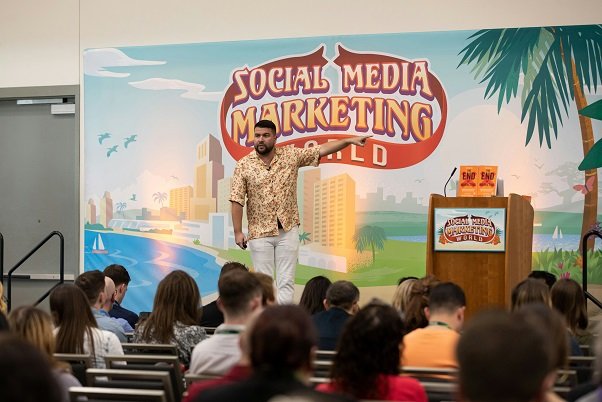
Social media marketing encompasses a range of strategies employed by businesses to promote their products and services through various social media platforms. This digital marketing approach leverages the vast audience that social networks offer, allowing companies to engage with consumers in a more personal and interactive manner. By utilizing platforms such as Facebook, Twitter, Instagram, and LinkedIn, businesses can not only enhance their visibility but also foster meaningful connections with their target demographic.
The importance of social media marketing in today’s digital landscape cannot be overstated. With billions of active users engaging daily, social media serves as a powerful tool for brand awareness and customer engagement. Consumers frequently turn to social media channels for product recommendations, input on services, and direct interaction with brands. Consequently, businesses that invest in social media marketing are usually better positioned to adapt to market shifts, respond to customer inquiries promptly, and create community-driven campaigns that resonate with their audience.
Furthermore, the dynamic nature of social media allows businesses to leverage real-time analytics, enabling them to assess the effectiveness of their marketing campaigns. This immediacy affords companies the ability to refine their strategies based on direct feedback and engagement metrics, thus increasing the overall effectiveness of their marketing efforts. As we delve deeper into the evolution of social media marketing, it becomes evident how this practice has transitioned from simple postings to sophisticated strategies that incorporate data-driven insights and personalized content designed to engage consumers profoundly.
The Early Days of Social Media
The inception of social media platforms can be traced back to the early 2000s, a period marked by the emergence of influential sites like Friendster, MySpace, and the early iterations of Facebook. Friendster, launched in 2002, is often credited as one of the first social networking sites, allowing users to connect with friends and share personal information. This platform set the stage for future developments in social media, focusing primarily on fostering personal connections rather than commercial marketing.
MySpace followed closely behind in 2003, which quickly became the most popular social platform of its time. MySpace not only enabled users to create customized profiles but also introduced features like music sharing, which attracted a younger demographic. During this period, social media was largely a space for individual expression and community building, with users primarily engaging for personal rather than business purposes.
At this early juncture, marketers faced significant challenges in understanding how to effectively leverage these new channels for their brands. The question of how to utilize social media marketing was still in its infancy, with many businesses uncertain about what constituted effective engagement on these platforms. Brands were initially skeptical about investing in social media advertising, as the return on investment was not clearly evident. Traditional forms of marketing dominated the landscape, leaving many businesses hesitant to embrace this new frontier.
The introduction of Facebook in 2004 marked a pivotal evolution in social media dynamics, gradually shifting the focus from purely personal connectivity to an integrated platform that catered to broader audiences, including businesses and brands. As these early platforms evolved, they gradually laid the groundwork for a more sophisticated understanding of social media marketing, setting the stage for future developments in digital marketing strategies.
The Rise of Facebook and Influencer Marketing
The advent of social media transformed the marketing landscape, with Facebook emerging as a foundational platform that profoundly impacted how brands connect with consumers. Launched in 2004, Facebook rapidly grew to become the most popular social networking site. Its early adoption was primarily fueled by college students, but it quickly expanded to a broader audience, allowing users to share content, engage with friends, and connect with brands. By harnessing this extensive user base, marketers recognized an opportunity to reach consumers on a more personal level.
As Facebook’s user engagement soared, so did its advertising potential. Brands began to see the value in creating tailored ads targeted at specific demographics, relying on Facebook’s sophisticated data analytics. This led to targeted advertisements that not only reached potential customers effectively but also yielded impressive returns on investment. As part of this evolution, brands increasingly engaged with content creators and social media personalities, who began to be identified as influencers.
Influencer marketing emerged as a pivotal force, leveraging individuals with large followings to promote products and services. Brands collaborated with influencers to reach niche markets, enabling them to connect authentically with their target audience. The trust and credibility that influencers had cultivated with their followers translated into effective marketing strategies, whereby recommendations carried more weight than traditional advertising. This method redefined engagement, as consumers began to view influencers as relatable figures rather than conventional brand endorsers.
Thus, the rise of Facebook, accompanied by the emergence of influencer marketing, marked a significant paradigm shift in how brands approached consumer engagement. The incorporation of social media analytics and influencer collaborations not only revolutionized advertising practices but also fostered community-driven marketing strategies, ultimately forming a symbiotic relationship between brands and consumers.
The Impact of Mobile Technology on Social Media Marketing
The advent of mobile technology has significantly transformed the landscape of social media marketing. With the proliferation of smartphones, which have become ubiquitous over the past decade, an increasing number of users access social media platforms through mobile devices. This shift is not only a reflection of changing consumer behavior but also a catalyst for the evolution of marketing strategies employed by businesses worldwide.
As smartphone usage surged, social media platforms swiftly adapted by developing mobile-friendly applications. These apps are designed to offer seamless user experiences, allowing for easy navigation, instant communication, and engaging content consumption. The rise of such mobile-centric interfaces has compelled businesses to rethink their marketing approaches. As users increasingly prioritize mobile engagement, organizations recognize the necessity of incorporating mobile strategies into their social media marketing efforts.
Businesses are now leveraging mobile technology to enhance their outreach and engagement with consumers. Features such as location-based services, push notifications, and real-time interaction enable brands to connect with their audiences more effectively. For instance, social media advertisements tailored for mobile users can utilize geolocation data, making targeted marketing campaigns more relevant and personalized. This ability to reach customers in a timely manner has given brands a competitive advantage.
Moreover, mobile technology has also facilitated the rise of new content formats, such as live videos and stories, which resonate well with mobile users’ preferences for quick and easily digestible content. Such innovations not only enhance user engagement but also create a dynamic environment where businesses can experiment and refine their marketing strategies. Overall, the integration of mobile technology in social media marketing has reshaped how brands interact with audiences, driving the necessity for a mobile-centric approach in today’s digital marketplace.
The Shift Towards Content Marketing and Engagement
The evolution of social media marketing has seen a significant transformation from traditional advertising approaches to a concentrated focus on content marketing and genuine engagement. Historically, brands relied on direct sales pitches and straightforward advertisements to push their products or services. However, as audiences became more discerning and developed an aversion to overt advertising, a paradigm shift emerged. Brands have started to recognize the value of fostering authentic connections with their audience through a content-driven strategy.
In this new landscape, storytelling has taken center stage. Rather than merely presenting a product, brands now share narratives that resonate with their target demographics. This approach not only captivates potential customers but also builds emotional ties, rendering the brand more relatable. By weaving compelling stories that highlight the brand’s values and mission, companies can enhance their visibility and strengthen their overall market presence.
Additionally, the rise of user-generated content (UGC) has further emphasized the importance of community engagement. Encouraging customers to share their experiences and create content aligned with a brand allows for a more organic promotional approach. This strategy leverages the power of social proof, as potential customers often trust the opinions of their peers over corporate messaging. UGC not only promotes authenticity but also provides brands with a wealth of content that can be repurposed across various social media platforms.
Moreover, brands are placing significant emphasis on community-building efforts. Through interactive campaigns, social media challenges, and collaborative projects, companies encourage active participation from their audience. This not only enhances brand loyalty but also generates a sense of belonging among consumers. In essence, the shift towards content marketing and engagement has reshaped the way brands communicate, favoring substantive interactions over traditional sales tactics.
The Analytics Revolution in Social Media Marketing
The advent of analytics tools has fundamentally transformed social media marketing, enabling businesses to gain valuable insights into user behavior and engagement patterns. With the proliferation of various measurement platforms, organizations can now access detailed metrics that help them understand how audiences interact with their content. These analytics tools provide data on key performance indicators such as reach, impressions, clicks, and conversions, allowing marketers to assess the effectiveness of their campaigns rigorously.
Utilizing analytics, businesses can track the performance of their social media posts in real-time, which facilitates immediate adjustments to optimize engagement and drive conversion rates. For example, identifying the times when a target audience is most active can inform scheduling decisions, leading to increased visibility and interaction with content. Furthermore, businesses can use sentiment analysis to gauge audience reactions to their branding efforts, which in turn aids in crafting more tailored messages that resonate with their clientele.
Moreover, by implementing A/B testing and scrutinizing engagement data, marketers can fine-tune their strategies, ensuring they are both reactive and proactive in their approach to social media marketing. This data-driven decision-making process has become an integral part of modern marketing practices and helps to allocate resources more efficiently. As a result, companies that leverage analytics tools often benefit from enhanced customer loyalty, better engagement rates, and ultimately, an increase in ROI. In this way, the analytics revolution not only aids in measuring success but also plays a crucial role in shaping future marketing strategies.
The Emergence of New Platforms and Trends
The landscape of social media marketing has undergone significant transformation with the emergence of new platforms such as Instagram, TikTok, and Snapchat. Each of these platforms offers unique features that cater to the evolving preferences of users, thus shaping innovative marketing strategies.
Instagram, launched in 2010, quickly gained popularity for its visually driven content. The platform’s focus on high-quality images and videos allows brands to showcase their products creatively. This shift towards visual storytelling has led to the widespread adoption of influencer marketing, where brands collaborate with social media influencers to reach target audiences in an authentic manner.
TikTok, a short-form video platform released in 2016, represents a new frontier in social media marketing. Its algorithm promotes highly engaging, bite-sized videos that have captured the attention of younger demographics, particularly Gen Z. Brands leveraging TikTok often focus on creativity and trends, producing content that resonates with the platform’s audience through challenges or viral dances. Consequently, brands are increasingly recognizing the importance of adapting their strategies to fit TikTok’s unique ecosystem.
Snapchat has pioneered the concept of ephemeral content, where posts disappear after a short duration. This feature caters to younger users seeking more genuine, less curated content. Marketers are leveraging Snapchat Stories to create time-sensitive promotions, encouraging a sense of urgency and exclusivity that enhance customer engagement. Moreover, the platform’s interactive elements, such as filters and lenses, offer brands innovative ways to promote their products.
The rise of these platforms and the trends they bring, especially in video marketing and ephemeral content, illustrate how social media is not static. As user demographics evolve, so must the strategies employed by marketers to remain relevant and effective in their outreach efforts.
The Role of Paid Advertising in Social Media Marketing
As social media platforms have evolved, the significance of paid advertising in social media marketing has grown substantially. Companies now recognize these platforms as essential channels for reaching their target audiences effectively. The capabilities of ad targeting provided by social media networks have become increasingly sophisticated, enabling marketers to deliver highly personalized content that resonates with specific audience segments.
Platforms such as Facebook, Instagram, Twitter, and LinkedIn offer intricate targeting criteria, allowing businesses to segment their audiences based on demographics, interests, behaviors, and even past interactions with the brand. This precision targeting ensures that advertisements reach individuals who are more likely to engage with the content, ultimately improving the efficiency of marketing efforts. Additionally, the ability to test various advertising strategies through A/B testing has afforded marketers the opportunity to refine their campaigns significantly before broader implementation.
The model of pay-per-click (PPC) advertising has become a cornerstone within these platforms. This model allows businesses to only pay when users interact with their ads, making it a cost-effective solution for many organizations, especially small to medium enterprises. The PPC model incentivizes continuous optimization, ensuring that marketers get the most value out of their advertising spends. Furthermore, as audience behaviors change, the flexibility of PPC advertising enables adjustments in real-time, helping brands stay relevant with their messaging.
Another aspect of paid advertising is the increasing demand for customized ads that cater to niche markets. Users expect content that matches their personal interests, which consequently drives companies to invest in tailored advertising strategies. As social media users become more discerning in their online interactions, the role of paid advertising will likely continue to expand, reinforcing its place as a critical element in social media marketing.
The Future of Social Media Marketing
The landscape of social media marketing is set to undergo transformative changes in the coming years. As technology continues to advance, several significant trends are expected to reshape how brands engage with their audiences. One major development in this realm is the increasing integration of artificial intelligence (AI) into social media platforms. AI is poised to enhance user experience through personalized content delivery, predictive analytics, and automation of marketing strategies, enabling brands to communicate more effectively with their target demographics.
Another promising advancement is the rise of augmented reality (AR) experiences. As social media channels adopt AR technology, marketers will have the opportunity to create immersive experiences that engage consumers like never before. For instance, users can try on products virtually through their devices, making shopping more interactive and enjoyable. Such innovations can significantly improve customer engagement, driving higher conversion rates as users interact with brand offerings in an innovative manner.
Additionally, social commerce is anticipated to gain momentum as more platforms incorporate shopping features directly within their interfaces. This shift allows users to discover, review, and purchase products without leaving the app, streamlining the buying journey. The integration of social media with e-commerce signifies a compelling new frontier, where users can easily engage with brands and make informed purchasing decisions based on real-time feedback and social proof.
All these advancements highlight the necessity for brands to stay ahead of the curve by leveraging emerging technologies and understanding evolving consumer behaviors. As social media marketing continues to adapt and grow, companies that embrace these innovations will likely experience substantial benefits in terms of audience reach and engagement.