
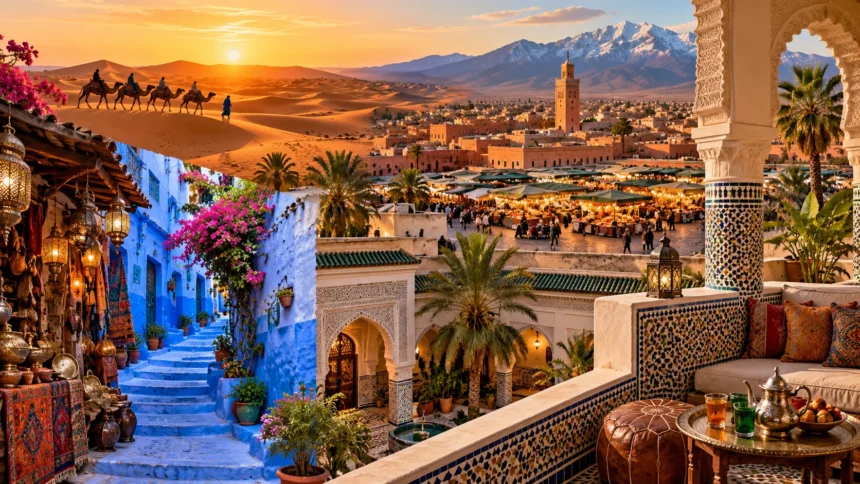
Morocco is one of the most fascinating travel destinations in North Africa, offering colorful cities, ancient medinas, spectacular mountains, golden desert landscapes, and beautiful Atlantic beaches. From the lively markets of Marrakech to the blue-painted streets of Chefchaouen and the impressive dunes near Merzouga, the country provides unforgettable experiences for every type of traveler. Whether you enjoy history, nature, shopping, traditional food, or cultural sightseeing, Morocco has something special to offer.
Planning a trip to Morocco becomes easier when you understand its major destinations, cultural traditions, transportation options, and seasonal weather conditions. The country combines historic architecture with diverse natural landscapes, allowing visitors to experience busy cities, peaceful mountain villages, and scenic coastal towns within one vacation. This Morocco travel guide explores the best places to visit, exciting things to do, and essential travel tips to help you plan a memorable North African adventure.
1. Explore Marrakech and Its Famous Attractions
Marrakech is one of Morocco’s most popular tourist destinations, known for its lively markets, historic palaces, and distinctive red-colored architecture. Located near the Atlas Mountains, the city offers an exciting combination of cultural attractions and traditional Moroccan experiences. Visitors can explore narrow streets, admire beautiful buildings, and discover a vibrant atmosphere that reflects the country’s rich heritage.
Jemaa el-Fnaa is among Marrakech’s most recognizable attractions, surrounded by food stalls, shops, and traditional entertainment. Travelers can also visit Bahia Palace, explore the historic Saadian Tombs, and admire the Koutoubia Mosque from appropriate public areas. Jardin Majorelle is another famous destination, offering beautiful gardens, colorful architecture, and peaceful surroundings away from the busy medina.
Shopping is an important part of the Marrakech experience, with traditional souks selling textiles, pottery, carpets, and handmade goods. Visitors can also enjoy Moroccan cuisine at local restaurants and explore the city’s historic neighborhoods. Spring and autumn are particularly pleasant seasons for sightseeing because temperatures are generally more comfortable than during the hottest summer months.
2. Discover the Blue Streets of Chefchaouen
Chefchaouen is one of the most beautiful places to visit in Morocco, famous for its blue-painted buildings and picturesque mountain setting. Located in the Rif Mountains of northern Morocco, the town offers a peaceful atmosphere compared with larger tourist cities. Its colorful streets and traditional architecture make it especially appealing to travelers interested in photography and cultural sightseeing.
The historic medina is Chefchaouen’s main attraction, featuring narrow pathways, small shops, and distinctive blue walls. Visitors can explore local craft markets, admire traditional doorways, and discover beautiful public squares. Plaza Uta el-Hammam provides a welcoming place to relax while appreciating the surrounding buildings and the town’s charming atmosphere.
Chefchaouen also offers access to nearby mountain scenery and attractive natural viewpoints. Travelers can explore suitable walking routes or enjoy panoramic views from established observation areas. Spending at least one night in the town allows visitors to appreciate its quieter morning atmosphere before larger groups of tourists arrive.
3. Visit Fes and Explore Its Historic Medina
Fes is one of Morocco’s most historically significant cities, recognized for its ancient architecture, cultural traditions, and remarkable medina. The city has played an important role in Moroccan education, religion, and craftsmanship for centuries. Its narrow streets and traditional buildings create an atmosphere that attracts visitors interested in discovering the country’s cultural heritage.
Fes el-Bali is the city’s famous historic medina, featuring an extensive network of streets filled with shops, workshops, and architectural landmarks. Visitors can admire the beautiful Bou Inania Madrasa and explore areas surrounding the historic Al-Qarawiyyin complex. Traditional leather tanneries are another recognizable attraction associated with the city’s longstanding craft traditions.
Exploring Fes is particularly rewarding with a knowledgeable local guide who can explain the history behind important landmarks. Travelers can discover handmade ceramics, traditional textiles, and regional Moroccan cuisine while walking through the medina. Comfortable footwear is recommended because many historic streets are narrow, uneven, and best explored on foot.
4. Experience the Sahara Desert Near Merzouga
The Sahara Desert is one of Morocco’s most extraordinary natural attractions, offering vast sand dunes, beautiful desert scenery, and unforgettable landscapes. Merzouga, located in southeastern Morocco, is a popular gateway to the Erg Chebbi dunes. The region attracts travelers interested in experiencing the peaceful atmosphere and remarkable beauty of the Moroccan desert.
Visitors can admire the dunes from designated viewpoints and enjoy organized sightseeing experiences with knowledgeable local guides. The surrounding desert landscape becomes particularly beautiful during sunrise and sunset when changing light creates impressive colors across the sand. Traditional desert accommodations also provide opportunities to appreciate the quiet environment and clear night skies.
Traveling to Merzouga requires additional planning because the desert is located far from Morocco’s major coastal cities. Visitors should consider transportation time, seasonal temperatures, and accommodation arrangements before departure. Choosing reputable tour providers and respecting local communities helps create a meaningful experience while protecting the fragile desert environment.
5. Explore the Beautiful Atlas Mountains
The Atlas Mountains are among Morocco’s most impressive natural destinations, featuring dramatic peaks, green valleys, and traditional mountain villages. Stretching across large parts of the country, these mountains offer opportunities for scenic sightseeing and cultural discovery. Their landscapes provide an attractive contrast to Morocco’s desert regions and busy historic cities.
The High Atlas region is particularly popular for its picturesque valleys, mountain scenery, and access to traditional Amazigh communities. Visitors can explore accessible walking paths, admire rural landscapes, and discover mountain settlements. Areas near Imlil are well known as starting points for guided excursions into the surrounding mountain environment.
Mountain weather can change quickly, and temperatures often differ significantly from nearby cities. Travelers should select activities appropriate for their experience and check seasonal conditions before exploring higher elevations. Guided sightseeing experiences offer a comfortable way to appreciate the mountains while learning about the region’s natural environment and cultural traditions.
6. Visit Casablanca and the Famous Hassan II Mosque
Casablanca is Morocco’s largest city and an important economic center, offering a fascinating combination of modern development and historic architecture. Located along the Atlantic coast, the city features broad streets, waterfront neighborhoods, and impressive cultural landmarks. Its urban atmosphere provides a different perspective on Moroccan life compared with traditional inland destinations.
The Hassan II Mosque is Casablanca’s most famous attraction, recognized for its magnificent architecture and beautiful oceanfront location. Visitors can admire the impressive minaret and detailed decorative craftsmanship, with guided interior visits available according to scheduled access arrangements. The surrounding coastal setting provides attractive views of the Atlantic Ocean.
Casablanca also offers shopping districts, restaurants, historic neighborhoods, and scenic waterfront areas. The Corniche is a popular coastal destination where travelers can enjoy ocean views and explore nearby establishments. Visitors interested in architecture and contemporary Moroccan culture may find Casablanca a rewarding addition to a broader travel itinerary.
7. Discover Essaouira and Its Beautiful Atlantic Coast
Essaouira is one of Morocco’s most charming coastal cities, known for its historic medina, beautiful beaches, and relaxed atmosphere. Located along the Atlantic Ocean, the city features whitewashed buildings with blue details and impressive historic fortifications. Its combination of cultural heritage and seaside scenery makes it especially attractive for travelers seeking a peaceful coastal escape.
The medina of Essaouira is recognized as a UNESCO World Heritage Site and features traditional shops, narrow streets, and historic architectural landmarks. Visitors can explore the old harbor, admire fishing boats, and walk along the city’s fortified coastal walls where access is permitted. The surrounding Atlantic scenery creates excellent opportunities for photography.
Essaouira is also known for its seafood restaurants, artistic community, and distinctive windy coastal climate. Visitors can explore local galleries, discover handmade crafts, and enjoy peaceful beach walks. Its relatively relaxed atmosphere makes it an appealing destination for travelers who want to balance cultural sightseeing with coastal relaxation.
8. Explore Rabat and Morocco’s Historic Capital
Rabat is Morocco’s capital city and one of its most interesting destinations for historical sightseeing. Located along the Atlantic coast, the city combines royal landmarks, traditional neighborhoods, and modern public spaces. Its organized urban layout and cultural attractions make it a rewarding destination for travelers interested in understanding Morocco’s political and architectural heritage.
The Hassan Tower is among Rabat’s most recognizable landmarks, standing near the Mausoleum of Mohammed V. Visitors can also explore the Kasbah of the Udayas, a historic fortified neighborhood overlooking the Bouregreg River. The surrounding streets, gardens, and scenic viewpoints create a beautiful environment for walking and photography.
Rabat also features museums, local markets, and coastal areas that provide opportunities for relaxed sightseeing. The city’s tram network makes traveling between several neighborhoods relatively convenient. Spending one or two days in Rabat allows visitors to discover its major attractions while experiencing a different atmosphere from Morocco’s busier tourist centers.
9. Visit Aït Benhaddou and Discover Ancient Architecture
Aït Benhaddou is one of Morocco’s most remarkable historical attractions, located near Ouarzazate along traditional routes connecting the Sahara and Marrakech. This fortified settlement is famous for its earthen architecture and dramatic desert surroundings. Its distinctive buildings create an unforgettable landscape that attracts photographers, history enthusiasts, and travelers interested in Moroccan heritage.
The historic ksar features traditional mudbrick structures arranged along a hillside overlooking the surrounding valley. Visitors can explore accessible pathways while learning about the settlement’s architectural and cultural significance. Aït Benhaddou is also recognized as a UNESCO World Heritage Site, reflecting its importance as an example of traditional southern Moroccan architecture.
The surrounding countryside offers impressive views of desert landscapes and nearby mountains. Many travelers visit Aït Benhaddou while traveling between Marrakech and the Sahara region. Comfortable walking shoes, drinking water, and sun protection are recommended because exploring the historic settlement involves uneven pathways and exposed outdoor areas.
10. Discover the Scenic Beauty of Todra Gorge
Todra Gorge is one of Morocco’s most impressive natural attractions, located in the eastern High Atlas region near Tinghir. The gorge features towering limestone cliffs and a narrow valley shaped by natural geological processes. Its dramatic landscape attracts visitors who enjoy photography, scenic walks, and exploring unusual natural environments.
The most recognizable section features enormous rock walls rising above the valley floor, creating a striking natural corridor. Visitors can admire the surrounding formations and enjoy designated walking areas. The changing sunlight highlights different textures and colors in the cliffs, making Todra Gorge especially appealing to landscape photographers.
Todra Gorge is often included in itineraries connecting the Atlas Mountains with the Sahara Desert. Travelers should check weather conditions because rainfall can affect access and safety within narrow canyon environments. Exploring with knowledgeable local guides can provide additional insight into the area’s geology and surrounding mountain communities.
11. Relax on the Beautiful Beaches of Agadir
Agadir is one of Morocco’s most popular beach destinations, located along the Atlantic coast in the southwestern part of the country. Known for its long sandy shoreline and established tourist facilities, the city attracts visitors seeking relaxing seaside vacations. Its generally mild coastal climate makes it an appealing destination throughout much of the year.
Agadir Beach is the city’s main coastal attraction, featuring an expansive sandy shoreline and a lively waterfront promenade. Visitors can enjoy beach walks, admire ocean views, and explore nearby restaurants and shops. The Agadir Oufella area also offers impressive panoramic views of the coastline and surrounding city from suitable visitor areas.
Agadir provides convenient access to nearby coastal destinations, including Taghazout, which is known for its surfing culture and scenic beaches. Travelers can combine seaside relaxation with local markets and cultural sightseeing. Choosing accommodation near preferred attractions helps make transportation and daily activities more convenient during a coastal vacation.
12. Experience Moroccan Food and Traditional Cuisine
Moroccan cuisine is one of the country’s greatest cultural attractions, offering delicious combinations of aromatic spices, fresh ingredients, and traditional cooking techniques. Influenced by Amazigh, Arab, Mediterranean, and other culinary traditions, Moroccan food reflects the country’s diverse heritage. Exploring local restaurants and markets provides opportunities to discover regional flavors and traditional food preparation.
Tagine is one of Morocco’s most recognizable dishes, prepared in a distinctive cooking vessel with combinations of vegetables, meat, and seasonings. Couscous is another important traditional food, often served with vegetables and flavorful accompaniments. Visitors can also enjoy harira soup, freshly baked bread, and Moroccan mint tea.
Food markets and locally operated restaurants offer excellent opportunities to experience traditional Moroccan cuisine. Different regions feature their own specialties, making culinary exploration an enjoyable part of traveling across the country. Choosing hygienic establishments and communicating dietary requirements clearly can help visitors appreciate Morocco’s rich food traditions comfortably.
13. Learn About Moroccan Culture and Local Traditions
Morocco has a rich cultural identity shaped by Amazigh, Arab, African, Mediterranean, and Islamic influences. These traditions are visible through historic architecture, traditional clothing, regional languages, music, and everyday community life. Understanding local customs helps travelers appreciate the country’s heritage while encouraging respectful interactions with residents.
Traditional souks are an important part of Moroccan urban culture, offering handmade goods such as carpets, pottery, leather products, and textiles. Visitors can also discover local festivals, historical landmarks, and cultural exhibitions. Exploring these experiences with curiosity and respect provides valuable insight into the artistic and social traditions of different Moroccan communities.
Respectful clothing is recommended when visiting religious or culturally significant locations. Travelers should ask permission before photographing individuals and follow visitor guidelines at historic landmarks. Learning simple Arabic or Amazigh greetings can also make everyday interactions more meaningful while demonstrating appreciation for Morocco’s diverse cultural heritage.
14. Understand the Best Time to Visit Morocco
Morocco experiences different climatic conditions across its coastal cities, mountain regions, and desert landscapes. The best time to visit depends on your preferred destinations and planned activities. Understanding seasonal weather patterns helps travelers choose suitable months for historical sightseeing, coastal relaxation, mountain excursions, and exploring the Sahara region.
Spring, particularly March through May, is often considered an excellent period for visiting Morocco because temperatures are generally comfortable in many regions. Autumn, from September through November, can also provide pleasant conditions for sightseeing. Summer temperatures can become extremely high in inland cities and desert areas, making some outdoor activities less comfortable.
Coastal destinations such as Essaouira and Agadir often benefit from milder ocean-influenced conditions during warmer months. Mountain regions may experience cold temperatures and snow during winter, especially at higher elevations. Travelers should research regional weather forecasts and consider seasonal accommodation demand when planning their Moroccan vacation.
15. Follow Essential Morocco Travel Tips for First-Time Visitors
Preparing for a Moroccan vacation involves understanding entry requirements, transportation options, local customs, and accommodation arrangements. International travelers should confirm passport validity and determine whether a visa is required for their nationality. Visa exemptions and electronic visa eligibility vary, making it important to verify current immigration requirements before departure.
The Moroccan dirham is the country’s official currency, and cash remains useful for smaller markets, local shops, and certain transportation services. Trains connect several major cities, while intercity buses and private transfers provide access to additional destinations. Travelers visiting remote mountain or desert regions should arrange transportation carefully because travel distances can be considerable.
Accommodation in Morocco ranges from affordable guesthouses and traditional riads to modern hotels and luxury resorts. Visitors should compare locations, transportation access, and available facilities before booking. Carrying suitable clothing, drinking water, and sun protection while following normal travel safety precautions can help create a comfortable and enjoyable Moroccan vacation.
Conclusion
Morocco offers an extraordinary combination of historic cities, magnificent desert landscapes, beautiful mountains, and charming Atlantic coastal destinations. From the colorful markets of Marrakech and the blue streets of Chefchaouen to the ancient architecture of Fes and the Sahara dunes near Merzouga, every region provides memorable travel experiences. Its rich cultural heritage and geographical diversity make Morocco one of North Africa’s most appealing destinations.
Whether you enjoy exploring traditional medinas, discovering historical landmarks, admiring mountain scenery, or relaxing on beautiful beaches, Morocco provides countless opportunities for unforgettable adventures. Destinations such as Essaouira, Rabat, Aït Benhaddou, and Todra Gorge highlight the country’s impressive variety. Combining cultural sightseeing with nature-focused experiences allows visitors to discover different sides of Moroccan life.
Planning your journey around seasonal weather, transportation connections, accommodation choices, and available time can improve your overall vacation. Consider exploring a few regions at a comfortable pace rather than rushing between distant destinations. With thoughtful preparation and a flexible itinerary, visiting Morocco can become an unforgettable experience filled with beautiful scenery, cultural discoveries, and lasting travel memories.
Frequently Asked Questions (FAQs)
1. What are the best places to visit in Morocco?
The best places to visit in Morocco include Marrakech, Fes, Chefchaouen, Merzouga, Essaouira, Rabat, and the Atlas Mountains. These destinations offer historic architecture, beautiful scenery, cultural attractions, and memorable travel experiences.
2. How many days are enough for a Morocco trip?
Seven to ten days is generally enough to explore several popular Moroccan destinations. Travelers interested in combining imperial cities, the Sahara Desert, and coastal attractions may prefer a two-week itinerary.
3. What is the best month to visit Morocco?
April, May, September, and October are often excellent months for visiting Morocco because temperatures are generally comfortable across many regions. The best timing depends on your destinations and planned outdoor activities.
4. Is Morocco expensive for tourists?
Morocco offers accommodation, transportation, and dining options across different budgets. Local restaurants and guesthouses can be affordable, while luxury riads, private desert excursions, and upscale resorts can increase travel expenses.
5. Is Morocco good for first-time international travelers?
Yes, Morocco is a rewarding destination for first-time international travelers interested in culture, history, and nature. Researching entry requirements, local customs, transportation options, and accommodation locations can help make the journey smoother.