
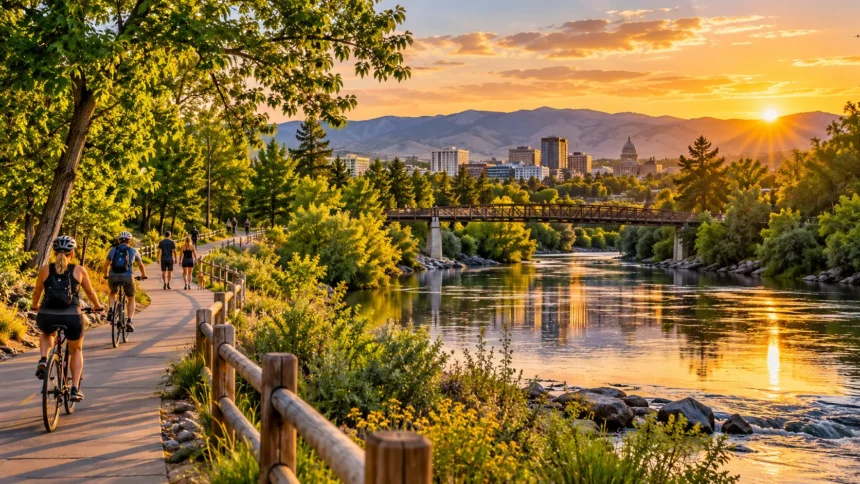
Why the Boise River Greenbelt Is Worth Visiting
The Boise River Greenbelt is one of the best places to experience the outdoor side of Boise, Idaho. This riverside pathway follows the Boise River through parks, neighborhoods, natural areas, and parts of the city. Visitors can walk, run, cycle, watch wildlife, enjoy river views, or simply use the trail as a relaxing way to explore Boise.
One of the Greenbelt’s biggest advantages is its combination of nature and city access. You can spend part of the morning beside cottonwood trees and flowing water, then reach downtown restaurants, museums, cafés, and public parks without traveling far. This balance makes the trail especially attractive to travelers who enjoy outdoor recreation but still want convenient urban amenities nearby.
The Greenbelt works well for solo travelers, couples, families, cyclists, and anyone looking for an easy outdoor activity. You do not need advanced hiking skills or special equipment to enjoy most sections. Whether you have one hour or an entire day, the Boise River Greenbelt provides a flexible experience that can easily fit into a wider Boise itinerary.
Walk or Bike Along the Boise River
Walking the Greenbelt is one of the simplest ways to experience its scenery. The mostly developed pathway passes through shaded areas, open parks, bridges, and stretches directly beside the river. Because the route extends through several parts of the Boise area, visitors can choose a short walk near downtown or plan a longer outing across multiple neighborhoods.
Cycling allows you to cover much more of the Greenbelt in a single visit. A bike makes it easier to move between parks, riverside attractions, downtown areas, and quieter sections of the trail. Recreational riders can enjoy a relaxed pace, while more experienced cyclists may choose longer routes that connect several communities along the Boise River.
Remember that the Greenbelt is shared by walkers, runners, cyclists, families, and other users. Ride at a controlled speed, give clear warning when passing, and remain especially careful around busy parks or narrow trail sections. Respectful trail behavior makes the experience safer and more enjoyable for everyone using this popular Boise recreation route.
Spend Time at Julia Davis Park
Julia Davis Park is one of the most convenient places to combine Greenbelt exploration with major Boise attractions. Located close to downtown, the large park provides grassy spaces, mature trees, walking paths, picnic areas, and access to several cultural destinations. It works particularly well as a starting point for visitors exploring the Greenbelt for the first time.
The park area is surrounded by attractions that can add variety to your day. Depending on your interests, you can combine a riverside walk with museums, gardens, or other nearby cultural experiences. This makes Julia Davis Park useful for families or groups where some people want outdoor recreation while others prefer sightseeing and indoor activities.
Bring a picnic or take a break under the trees before continuing along the river. The open space creates an easy place to slow down between attractions, especially during warmer months. Because the park is close to central Boise, you can also continue into downtown afterward for coffee, lunch, shopping, or an evening meal.
Relax at Ann Morrison Park
Ann Morrison Park is another popular green space connected with the Boise River and Greenbelt. Its wide lawns, walking areas, recreational spaces, and river access make it suitable for visitors who want more than a quick trail stop. The park has enough room to feel open and relaxed, even when the surrounding city remains busy.
Families can enjoy the park as a place to rest, play, or have a casual picnic. Travelers completing a longer Greenbelt walk or bike ride may also find it useful as a natural stopping point. Large trees and grassy areas provide welcome breaks during warm weather, while the river adds a scenic backdrop to the surrounding recreation spaces.
Ann Morrison Park is especially useful when building a flexible Boise day. You can begin with a morning bike ride, stop in the park, and continue toward other riverfront areas later. Avoid overscheduling the visit because part of the Greenbelt’s appeal comes from having time to sit, watch the water, and enjoy Boise’s slower outdoor atmosphere.
Watch Wildlife and Enjoy Riverside Nature
The Boise River corridor supports a surprising amount of wildlife despite running through an urban area. Birds are especially noticeable, including waterfowl, songbirds, and larger species that use the river and nearby vegetation. Travelers interested in nature photography or casual birdwatching can find plenty to observe without leaving the city for a remote wilderness destination.
Early mornings are often rewarding because the trail may be quieter and wildlife can be more active. Move slowly through natural sections and listen for bird calls in the trees or movement near the water. Binoculars can make wildlife watching more enjoyable, but they are not essential for noticing many of the animals and birds found along the river corridor.
Respect the natural environment by observing animals from a distance and avoiding unnecessary disturbance. Do not approach nests, feed wildlife, or leave food near the trail. Keeping dogs controlled and staying on appropriate paths also helps protect sensitive riverbank areas while allowing other visitors to enjoy the Greenbelt’s natural setting.
Explore Downtown Boise From the Greenbelt
One of the Greenbelt’s greatest strengths is how easily it connects outdoor recreation with downtown Boise. Instead of treating the trail as a separate attraction, visitors can use it as part of a larger sightseeing route. A morning walk beside the river can naturally lead into downtown restaurants, cafés, shops, museums, and other city attractions.
This combination works especially well for travelers with limited time. You can enjoy fresh air and river scenery without dedicating an entire day to leaving the city. After a few miles on the Greenbelt, stop for lunch downtown, explore nearby streets, and return to the river later when temperatures become more comfortable.
Staying near central Boise also makes Greenbelt access convenient throughout your trip. Instead of planning one formal visit, you can use sections of the trail for morning walks or evening bike rides. This flexibility allows the Greenbelt to become part of your daily Boise experience rather than something you see once and immediately leave behind.
Discover Garden City Along the Greenbelt
The Greenbelt continues through Garden City, offering travelers another interesting section of the Boise River corridor. This area combines riverside recreation with local businesses, creative spaces, restaurants, and places to relax. Cycling between Boise and Garden City can be an enjoyable way to explore beyond the downtown core without depending entirely on a car.
Garden City has developed its own character while remaining closely connected with the wider Boise area. Visitors can plan a Greenbelt ride with stops for food, drinks, or casual exploration. This creates a more varied outing than simply traveling along the path without stopping and allows you to experience different neighborhoods along the Boise River.
If you plan to combine cycling with restaurants or tasting rooms, organize your route responsibly and consider how you will return safely. You do not need to visit many businesses to enjoy the area. A relaxed stop followed by more riverside riding can provide a good balance between local culture and outdoor recreation.
Enjoy the Boise River Beyond the Trail
The Boise River itself is a major part of the Greenbelt experience. Even if you stay entirely on the pathway, the sound of flowing water and changing river scenery create much of the trail’s atmosphere. Bridges, shaded riverbanks, open sections, and park areas provide many opportunities to stop and appreciate the water from different perspectives.
During warmer months, river recreation becomes an important part of Boise’s outdoor culture. Depending on conditions and local rules, visitors may see people floating or enjoying designated recreation areas. If you plan any activity on the water, understand current river conditions and use appropriate equipment rather than assuming calm-looking sections are automatically safe.
You can still enjoy the Boise River without entering the water. Bring a book, find a comfortable park area, photograph the scenery, or simply pause during a longer walk. These quieter moments often make the Greenbelt memorable because they allow you to experience the river as part of Boise’s everyday landscape rather than only as an attraction.
Know the Best Time to Visit the Greenbelt
Spring can be an excellent time to visit because temperatures become comfortable and riverside vegetation begins turning greener. Walking and cycling are often pleasant before the stronger summer heat arrives. However, changing river conditions and occasional wet weather mean visitors should remain aware of temporary trail conditions during the season.
Summer provides long daylight hours and plenty of opportunities for cycling, picnics, and outdoor activities. Temperatures can become hot during parts of the day, so morning and evening outings are often more comfortable. Carry water, use sun protection, and choose shaded trail sections when possible, especially if you are planning several hours of activity.
Autumn brings cooler weather and colorful foliage along some parts of the river corridor, creating excellent conditions for relaxed walking and photography. Winter offers a quieter atmosphere, although cold temperatures and occasional icy conditions can affect the experience. The Greenbelt can be enjoyed year-round, but the best season depends on your preferred activity and tolerance for weather.
Follow Greenbelt Safety and Trail Etiquette
The Boise River Greenbelt is a shared recreational space, so awareness of other users is important. Walk on the appropriate side of the path, avoid suddenly stopping in busy areas, and keep groups from blocking the entire trail. Cyclists should slow down when approaching crowded sections and clearly signal before passing pedestrians from behind.
If you are visiting with children or pets, keep them close when the trail becomes busy. Dogs should be managed according to posted local requirements, and owners should clean up after them. Pay extra attention near road crossings, bridges, riverbanks, and areas where cyclists and pedestrians may enter the pathway from different directions.
Basic preparation can also make your outing more comfortable. Carry drinking water, wear suitable shoes, protect yourself from strong sun, and keep valuables secure. If you are cycling farther than expected, make sure you understand your return route so a relaxing ride does not unexpectedly turn into an exhausting journey back to your starting point.
Plan a Half-Day Boise River Greenbelt Itinerary
For a simple half-day visit, begin around Julia Davis Park and spend some time enjoying the river and surrounding green spaces. Follow the Greenbelt at a relaxed walking or cycling pace, stopping when you find interesting viewpoints or shaded areas. Avoid setting a strict distance goal because the experience is more enjoyable when you can pause whenever something catches your attention.
Continue toward another major park or central riverside section, depending on how much time and energy you have. A bicycle lets you cover more ground, while walking creates more opportunities to notice wildlife, trees, bridges, and smaller details. Include time for a snack, coffee, or picnic so the outing does not feel like continuous exercise.
Finish by heading toward downtown Boise or another nearby neighborhood for a meal. This creates a balanced itinerary combining outdoor activity with the city’s dining and cultural scene. If you have additional time, return to the Greenbelt near sunset when the cooler temperature and changing light can provide a completely different riverside atmosphere.
Make the Most of Your Greenbelt Visit
The best way to experience the Boise River Greenbelt is to treat it as more than a single trail attraction. It connects parks, neighborhoods, nature, recreation, and parts of the city, making it useful for both sightseeing and transportation. Build your visit around what interests you most rather than trying to cover the entire route in one day.
Travelers who enjoy cycling may want to explore longer sections, while families may prefer staying around parks with easy access to open spaces and nearby attractions. Nature lovers can focus on quieter riverside areas, and first-time visitors can combine central sections with downtown Boise. The Greenbelt’s flexibility is one of the main reasons it appeals to many different travelers.
Leave room for spontaneous stops because some of the most enjoyable moments may not be planned. A shaded bench, wildlife sighting, quiet river view, or unexpected café can easily become a highlight. Moving at a comfortable pace allows you to appreciate how closely Boise’s outdoor character is connected with the river running through the city.
Conclusion
The Boise River Greenbelt is one of the best places to experience Boise’s combination of outdoor recreation and urban convenience. Visitors can walk, cycle, watch wildlife, explore riverside parks, and connect with downtown attractions without traveling far from the heart of the city.
Julia Davis Park, Ann Morrison Park, Garden City, natural river sections, and nearby downtown areas provide plenty of variety along the route. Whether you want an active bike ride or a quiet afternoon beside the water, the Greenbelt can be adapted easily to your schedule and preferred travel style.
For the best experience, choose a manageable section rather than trying to cover everything at once. Bring water, follow shared-trail etiquette, and leave time for unplanned stops. A relaxed Greenbelt outing can become one of the easiest and most enjoyable ways to understand Boise’s outdoor lifestyle.
FAQs
How long is the Boise River Greenbelt?
The Boise River Greenbelt extends for many miles along the river and connects multiple parks and communities. Most visitors explore only a selected section rather than attempting to travel the entire pathway in one outing.
Is the Boise River Greenbelt good for biking?
Yes. Cycling is one of the most popular ways to explore the Greenbelt because it allows you to cover longer distances. Riders should maintain safe speeds and respect pedestrians on shared sections.
What are the best parks along the Boise River Greenbelt?
Julia Davis Park and Ann Morrison Park are convenient choices for first-time visitors. Other riverside parks and green spaces also provide places to rest, picnic, enjoy scenery, and access different trail sections.
Is the Boise River Greenbelt family-friendly?
Yes. Many sections are suitable for families, especially around established parks and central areas. Parents should supervise children closely near the river, busy cycling sections, bridges, and road crossings.
What is the best time of year to visit the Greenbelt?
Spring and autumn provide comfortable temperatures for walking and cycling, while summer is excellent for longer outdoor days if you avoid peak heat. Winter is quieter but can bring colder or icy conditions.