

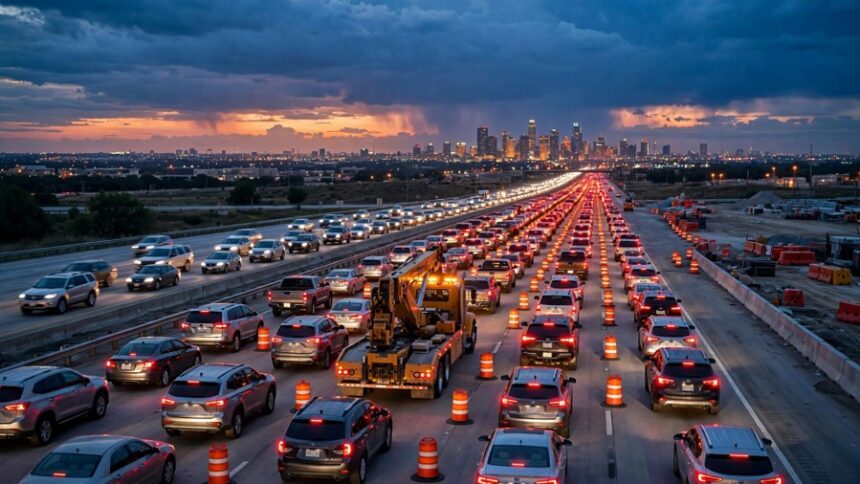
I-35 heavy duty towing between North Austin and Belton means getting a crew with wreckers, a rotator and recovery gear to a stalled or crashed rig on one of the busiest freight corridors in Texas, often in heat, construction and heavy traffic. That’s the direct answer. The bigger picture includes the roads around it. TX-130 runs east of I-35 as a toll bypass, State Highway 29 cuts west into the Hill Country from Georgetown, and US-183 stretches from Austin’s toll lanes out to Lampasas ranch country. ASAP Towing & Heavy Duty Semi Truck Wrecker covers all of them from six yards: Austin, Georgetown, Florence, Bertram, Lampasas and Copperas Cove. You’ll see where each road tends to break trucks and what the corridor’s toll lanes and frontage roads mean for a breakdown. You’ll also learn when a wreck needs more than a standard wrecker, plus the places another company might reach you sooner.
I-35 Heavy Duty Towing Runs Past Three ASAP Yards
Three of ASAP’s six yards sit close to I-35: Gardenia Drive in North Austin, Williams Drive in Georgetown near Exit 262, and Florence off TX-195, which meets I-35 at Exit 266. That spacing matters on a road this crowded.
North Austin to Round Rock: Heat, Tolls and Jackknifes
The company’s I-35 notes for North Austin read like a summer survival list. At Braker Lane, jackknifed trailers and trucks stalling in high heat top the list. Near Parmer Lane, crews deal with fuel shortages and shoulder drop recoveries. At the SH 45 and Loop 1 interchanges, congestion and blind spots cause crashes, and the toll connectors mean some tows happen from toll lanes. Around US-79 at Exit 253, semis break down in the industrial zones heading toward Hutto and Taylor. Personally, I think this stretch is the hardest place in Central Texas to break down a big rig, because shoulders are short and traffic rarely slows.
Georgetown to Belton: Rural Ramps and Ditches
North of Georgetown, I-35 thins out but doesn’t get easier. Near FM 972, blowouts happen on rural stretches. At the Jarrell area exits, the company lists diesel fuel issues and a steep exit ramp that complicates recoveries. Closer to Salado and Belton, trailers sway in the wind, rigs stall on rural curves and overheat in summer, and crews often pull trailers out of side ditches. At the I-14 and US-190 junction toward Killeen, the list includes blown engine recoveries. The Florence yard sits right in the middle of this run.
TX-130 Trades Traffic for Speed
TX-130 is a toll road running east of I-35, and plenty of truckers use it to skip Austin traffic. ASAP covers the stretch from the I-35 junction near Georgetown south through FM 971, SH 29, Patriot Way, University Boulevard and Chandler Road, US-79 at Hutto, and FM 685 near Pflugerville. Less traffic doesn’t mean fewer problems, though. Merging trucks overheat brakes on the ramp transitions, rural pavement wears down tires, and the US-79 interchange sees tractor-trailer crashes. Near University Boulevard, jackknifes happen during U-turns, and FM 685 brings shoulder blowouts and brake overheating where traffic merges. So TX-130 heavy towing often means reaching a rig at a high-speed interchange, where getting set up safely takes careful positioning. The Georgetown yard sits close to the northern end of this road.
Highway 29 Links the Hill Country to the Interstate
State Highway 29 runs west from Georgetown through Liberty Hill and Bertram to Burnet, and east toward Circleville near Taylor. Plenty of people search for it as US-29 heavy duty towing, but the road ASAP covers is SH-29, a state highway. In Burnet, where it meets US-281, rural approaches damage tires and strain axles. Around Bertram and Liberty Hill, stop-and-go traffic overheats engines, and tour bus traffic adds minor collisions. Seward Junction, where SH-29 meets US-183 north of Leander, brings crashes on merging ramps and brake wear on the downhill grade. In Georgetown, University Avenue backs up near I-35 and engines overheat at the signals. East near Circleville, poor signage confuses drivers and long rural runs cause coolant leaks. The Bertram yard puts heavy trucks right on this corridor.
US-183 Stretches From City Toll Lanes to Ranch Country
US-183 is two different roads in one. In North Austin, it runs as Research Boulevard past Loop 1 and Loop 360, where steep grades overheat engines and lock up brakes, and past Braker Lane, where event traffic near the stadium causes breakdowns. Farther north, it splits into the 183A toll road through Cedar Park and Leander, where crowded merges, toll confusion and overheated brakes are common. Past Seward Junction, the road turns rural toward Liberty Hill, Andice and Florence, where the company notes limited lighting near SH 138. Then it rolls into Lampasas, where it meets US-190 and US-281, with engine overheating and brake fade on the list. A US-183 tow truck near me search could come from a Cedar Park mall exit or a dark ranch road, and the Lampasas yard covers the western end.
When the Wreck Calls for More Than a Wrecker
Some calls go past a simple hookup. When a truck rolls, jackknifes or slides into a ditch, ASAP sends its mobile rotator service for overturned, off-road and large-scale recoveries. The rotator’s boom lifts and swings, so it can set a rolled trailer upright without needing a perfect angle. The company also handles cargo services for spilled or shifted loads, decking and undecking for stacked tractors, and heavy equipment transport for machinery. After the vehicles are gone, its site remediation service clears debris and fluids so the road is truly safe again. If you search for a heavy wrecker near me after a crash on I-35, ask whether the rotator and cleanup crew are part of the response. In my view, that question separates a company that tows from one that actually finishes the job.
Tips Only Corridor Drivers Learn the Hard Way
Central Texas roads have a quirk that confuses out-of-state drivers: frontage roads. Many of the company’s notes mention service roads, and towing a rig off a frontage road is a different setup than towing it off the main lanes. So here’s the hands-on tip: always tell dispatch whether you’re on the main lanes, the frontage road or a toll lane. On I-35 near SH 45 and on the 183A and TX-130 toll roads, a tow truck on the wrong level or in the wrong lane may have to drive several miles to turn around. Add the nearest exit name, your direction and what the truck is doing. If it’s something simple like fuel, a dead battery or a flat, ASAP’s roadside service can often handle it without a tow.
Spots Where You’ll Want a Different Crew
Real talk, six yards don’t cover everything equally. All of ASAP’s yards sit north and west of central Austin, so if you break down on I-35 south of downtown or on US-183 toward Lockhart, a company based on that side may arrive faster. Far west on US-183, past Lampasas toward Brownwood, the drive gets long. The website doesn’t list prices either, since heavy jobs depend on weight, distance and recovery work, so ask for an estimate on the first call. And if your vehicle was towed from a private lot, that’s an impound matter, not a roadside call, so ask about the impound process instead.
Map It, Save It, Call It
Central Texas freight runs on a handful of roads, and each one has its own trouble spots. I-35 brings heat, toll interchanges, frontage roads and rural ramps. TX-130 trades traffic for high-speed interchanges. SH-29 links the Hill Country through Bertram and Liberty Hill. US-183 runs from Austin toll lanes out to Lampasas ranch roads. Know which road you travel most, and know which yard is closest. When something goes wrong, tell dispatch your exact lane level, exit and direction, and describe what the truck is doing. Save (512) 556-5105 before your next run.
Frequently Asked Questions
What is a frontage road and why does it matter for towing?
A frontage road runs alongside the highway and connects to exits and local businesses. Telling dispatch whether you’re on the frontage road or main lanes helps the tow truck reach you without long detours.
Can a tow truck reach me on a toll road?
Yes, tow trucks can access toll roads, but entry and exit points are limited. Give your exact toll road, direction and nearest exit so the crew can plan the right route.
Why do semis overheat more in Central Texas summers?
High air temperatures, slow traffic and long climbs make engines and brakes work harder. Stop-and-go traffic on I-35 adds even more heat because there’s less airflow.
What does a rotator do in a semi truck recovery?
A rotator has a boom that lifts and swings, so it can raise a rolled truck or trailer from the side. It’s used for rollovers and recoveries where a regular wrecker can’t get a good angle.
Is State Highway 29 the same as US-29?
No, the road through Georgetown, Liberty Hill and Bertram is State Highway 29, not a US route. Some drivers search for it as US-29, but towing companies list it as SH-29.